Project Introduction and Overview
This log will provide a platform for reflexive and reflective practice and a means to demonstrate the compositional decisions, technical experiments, emotional responses, challanges, breakthroughs, shifts in thinking and revealing of patterns through the process of engaging in practice-led research.
RTZ (Return to Zero) is a practice-led research project exploring the influence that music-evoked nostalgia can have on the creative process and sonic outcomes within electronic music production, enacted through the use of period specific technologies and production techniques.
The project aims to unpack three key enquiries;
- In what ways does personal nostalgia for 80s and 90s dance music inform artistic choices during the composition and production of new music?
- How can the use of vintage or emulated technology from this era (synthesisers, drum machines, tape machines) impact the creative workflow and resulting sonic aesthetics of these compsitions?
- The role that refective practice plays in understanding the relationship between nostalgia, technology and electronic music production as creative practice.
This research log will feature text, images and embedded videos (QR Codes will be used to link to videos on the printed version) which document the process of engaging with the practice-led research.
Project Prerequisite Collection
Before engaging in the research, two forms of prerequisite collection/organisation are required.
- Equipment and technology resource collection and organisation (this also includes preparation and testing of equipment plus allocation and confirmation of studio space for experiments/recordings)
- Sources of nostalgia that will act as stimuli and inspiration for the generation of artifacts that form the research. This will be a particular track from a particular time and genre as relates to the desired period of nostalgia and potential personal (second-hand/mediated) nostalgia evoking triggers
Project Prep – Reference Collection
Prior to conducting the research, I have decided to plan out the tracks/sessions and what key equipment process will be explored in creating each track.
Following my initial research and reading I found that second-hand nostalgia (as illustrated by academics including Wilson (2016)), evoked through my consumption of sources of media that features the nostalgic elements (music, culture, fashion), best reflects my feeling of nostalgia towards 80s and 90s dance music. I was around as a child but wasn’t fully immersed in any of these scenes at this young age, therefore it’s likely that I am feeling nostalgic through a secondary source, also combined with some subconscious feelings of nostalgia from being there at the time as a child. Therefore, I will explore potential pieces of media/childhood memory/relationship I have with the track that can be linked to my feeling of nostalgia. I will aim to look closely at the reference track/tracks during the research/process of recording the tracks to try and find the personal reason for feeling nostalgic towards this sound.
This is the intended track list with equipment/techniques and reference/stimuli
1 – 000 (Zero) (Ambient/Soundscape track)
The Prodigy – Intro
Equipment/technique used – Tape loops, VHS samples, granular synthesis
(This will form 1 half of a pair of short ambient tracks that will bookend the album acting as an old-school album intro and outro, this will be named 000 (Zero) and the version at the end of the album named RTZ (Return to Zero).
2 – Jun-606 (Chicago House Track)
Inspired by Mr. Fingers – Can You Feel it
Equipment/technique used – Roland Juno6 synced to TR606 Clone, using the same clocking technique utilised by Larry Heard (Mr Fingers/Finger Inc.)
3 – The Arpeggiated Chicago Groove Machine Part 2 (Chicago House Track)
Inspired by Frankie Knuckles – Your Love
Equipment/technique used – ARP2600 clone used to create an arpeggiated synth line, SH101 for bassline, TR606 clone used in conjunction with 707 and 808 samples for drums.
4 – Factory Reset (British Style Acid House Track)
Inspired by A Guy Called Gerald – Voodoo Ray
Equipment/technique used – Recorded exclusively to tape using 16 track tape machine, SSL analogue console, hardware FX and outboard units, hardware synths, drum machines and samplers (TB303, SH101, TR606, Juno6, Korg Volca)
5 – Acid Monolith Beats (Sample Based Acid House Track)
Inspired by MARRS – Pump Up The Volume
Equipment/Technique used – Turntablism, vinyl record sampling and scratching, reinforced by digital sampling and scratching using a DJ controller and Serato to emulate the technique used using non-vinyl samples
6 -Hits Like Thunder(Breakbeat Rave Track)
Inspired by The Prodigy – No Good
Equipment/technique used – breakbeat sample processing though tape washing (recording to tape for effect) and use of Sherman Filterbank filter/distortion unit. Use of hardware synths and ROMpler (Yamaha SY85)
7 – Underground Habits (Acid Techno Track)
Inspired by New Order – Confusion (Pump Panel Reconstruction Mix)
Equipment/technique used – Colouring of TB303 baseline and TR909 kick drum using hardware distortion (FX pedals, units), use of hardware synths available in the mid to late 90s (Korg Electribe EA1, Yamaha SY85, SH101)
8 – RTZ (Return to Zero) (Ambient/Soundscape track)
Inspired by Boards of Canada – Rue The Whirl
Equipment/technique used – Tape loops, VHS samples, granular synthesis
(This will form the second half of a pair of short ambient tracks that will bookend the album acting as an old-school album intro and outro, this will be named RTZ (Return to Zero) and the version at the start of the album named 000 (Zero)
Project Prep – Equipment Testing/Collection
Testing and Cleaning The Tape Machine
I intend to use the Tascam 16-track tape machine for a couple of the tracks in this research.

I have access to this via New College Lanarkshire, where I work as a technician, and have decided to test how this sounds with some breakbeats routed through the machine. The aim here is to gauge how this sounds and if it works well enough.
I have a particular personal affection and connection with this tape machine, around two or so years ago this machine was brought into the college from an external source that had borrowed this for an extended time, broken and unusable. I took it upon myself as the studio tech to fix this machine and bring it back to life, it has been utilised by students in their projects and I have sent sounds into this in the past to test it but haven’t properly used this machine for one of my own productions, this was one reason for me seeking a project like this, to use the equipment I have maintained for others over these years and use them for my own projects (I feel I’ve earned that right).
I knew the machined had worked but after a year of student use/abuse I knew this would need tested and cleaned again before use. There’s something quite satisfying about the process of manually cleaning the tape heads and rollers with isopropyl alcohol, a process that used to be required as part of the recording process, makes the process feel more rewarding when tracking to tape.
Once the tape machine was cleaned and spooled up, I sent some breakbeat loops through the channels.
This tape machine doesn’t have a separate tape head for record and play. Therefore, you can’t monitor the sound of the tape and the effects of this to the sonic quality of the signal during the recording process. You must record the signal then rewind the tape and play it back to monitor this. This adds a level of excitement and anticipation of how the recording will turn out, you don’t get this with Pro Tools, Ableton etc.
The outcome of this test was perfect, the drums sounded nice and clear through the tape on playback, with that ‘warm’ tape quality applied… a sort of EQ, compression and soft saturation applied together in a way that can be difficult to replicate in the digital world. This is exactly the type of pf sonic quality that has potential to evoke nostalgia, all those old records from the past possess this charm, this sonic layer of warmth.
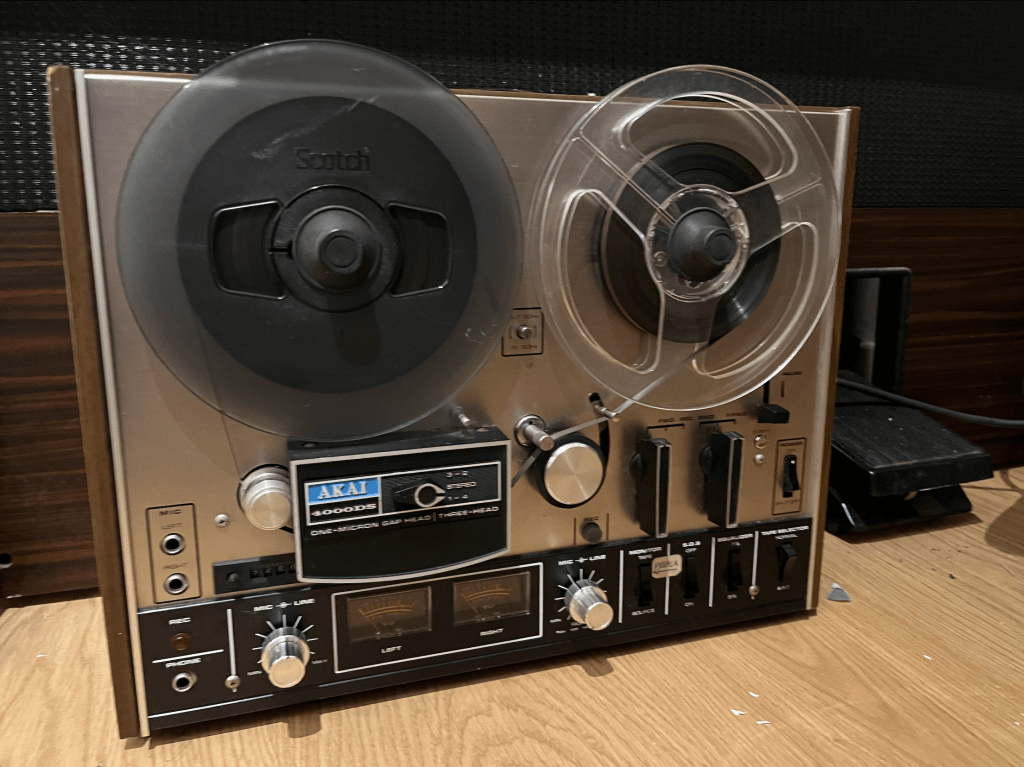
I will use this tape machine on my breakbeat rave track for drum colouring/ tape washing, for my Voodoo Ray inspired Acid House track (recorded solely to tape) and potentially for my ambient style tracks that utilise tape loops, though I’m more likely to use my own smaller scale quarter inch AKAI reel-to reel for this.
Yamaha SY85 Acquisition
I managed to acquire a loan of a Yamaha SY85 Synthesiser from 1994. This machine falls under the bracket of ‘rompler’, a machine that uses pre-fabricated sounds from audio samples stored on a floppy disk drive, which can then be manipulated using the synth engine to shape the sound of these samples.

It was really cool using and testing this machine, the process of inserting a floppy disk into the machine to retrieve the sounds contained, took me back to my youth. I remember playing video games on our old Windows 95 machine and using those floppy disks, there’s a level of charm with this format, like that of the cassette, a once common and popular consumer level format, now obsolete and forgotten (some younger generations only know the floppy disk as the save symbol).
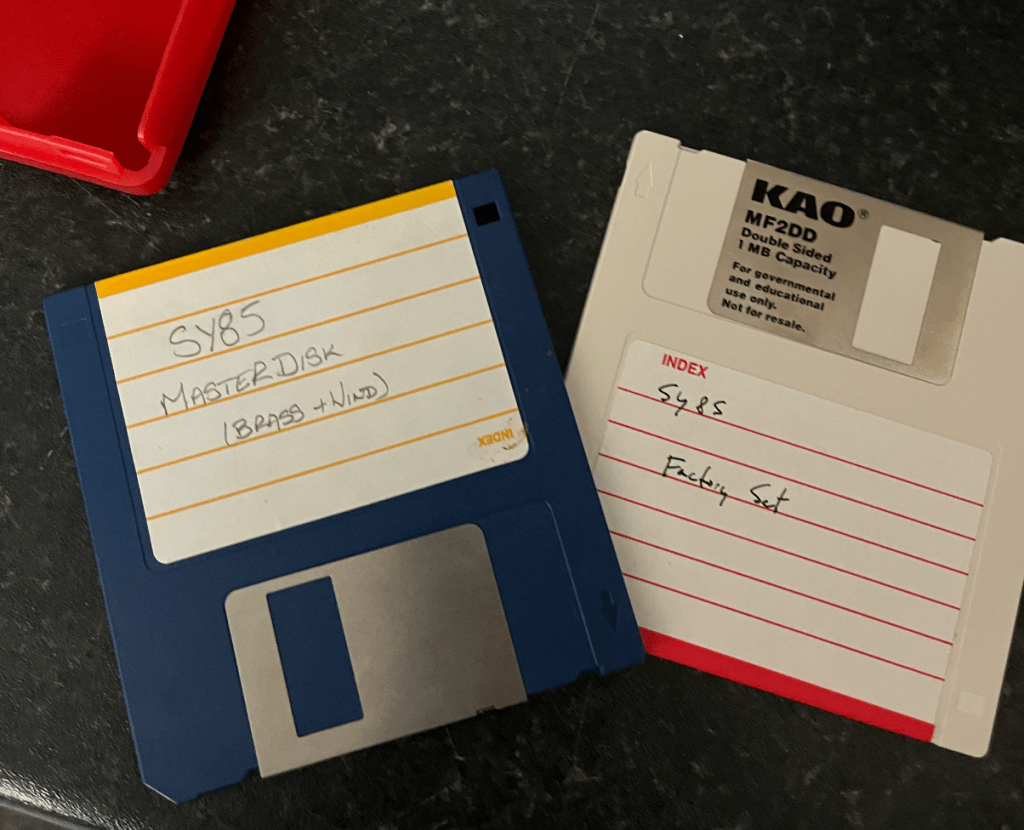
The physicality of holding this artefact and the process of ejecting and inserting this evokes nostalgia itself without even the consideration of the sounds contained, just the feeling of holding this drive.
Roland Juno 6
I have access to a vintage Roland Juno 6 analogue synthesiser from 1984 through my work, we have one of these in the studio at NCL and the mystery around how the college came into possession of this has become folklore in the NCL world. Word has it that some past member of staff found it in a charity shop labelled as ‘broken keyboard’ and sold for dirt cheap, obviously the shop not realising what they had.
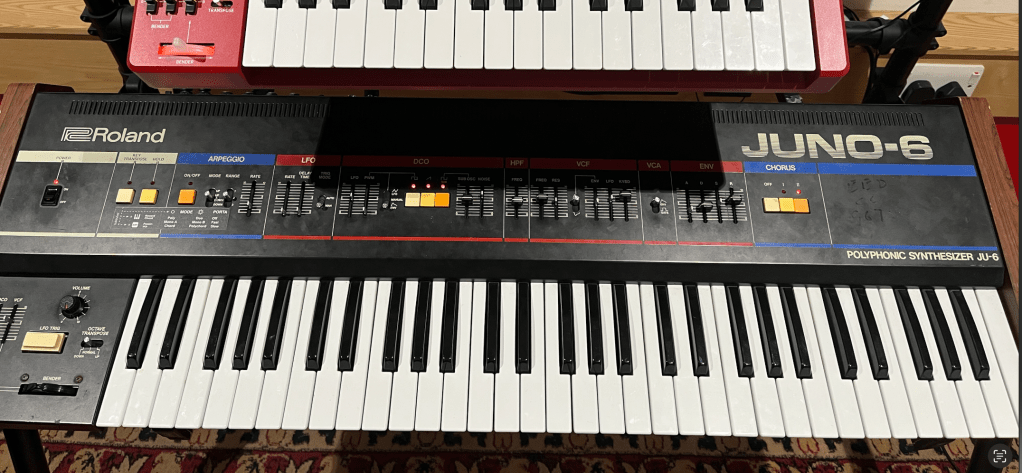
This is in full working order and also has recently been serviced and retro-fitted with 5-pin MIDI I/O for syncing and external sequencing of MIDI.
Attack of The Clones
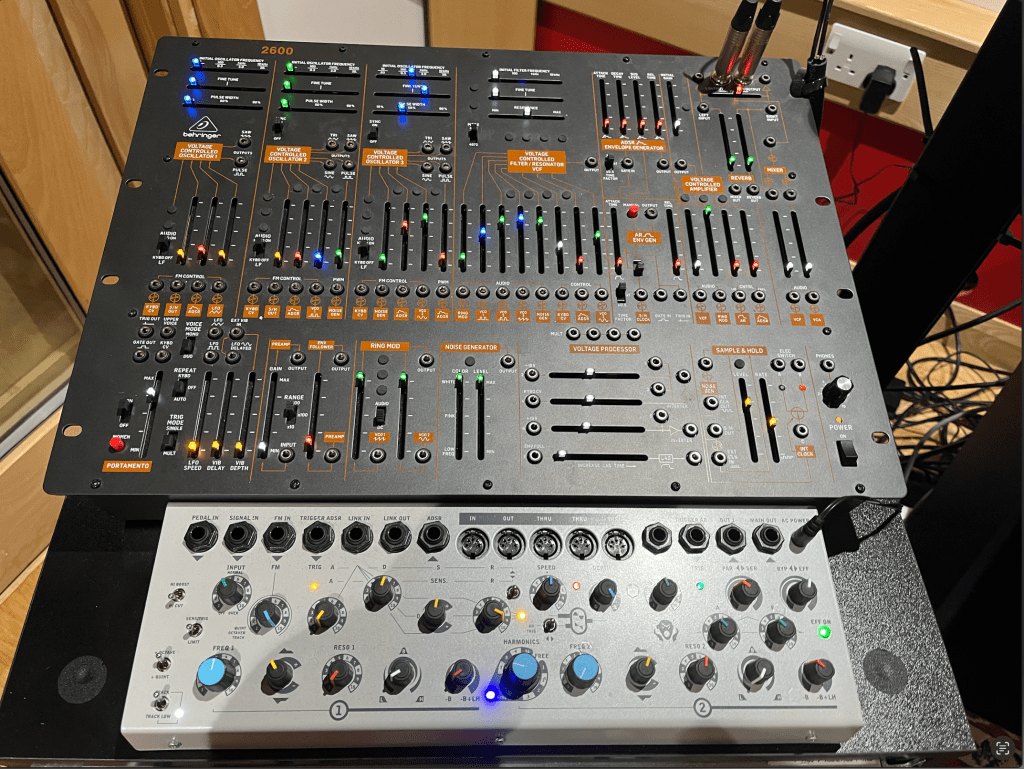
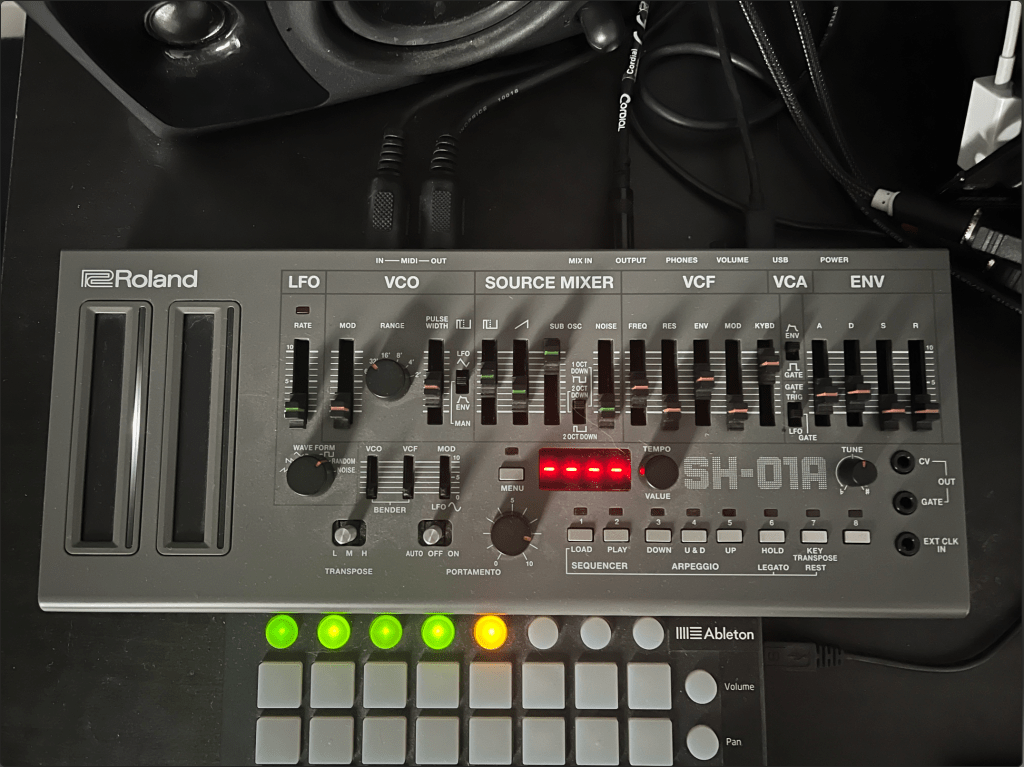
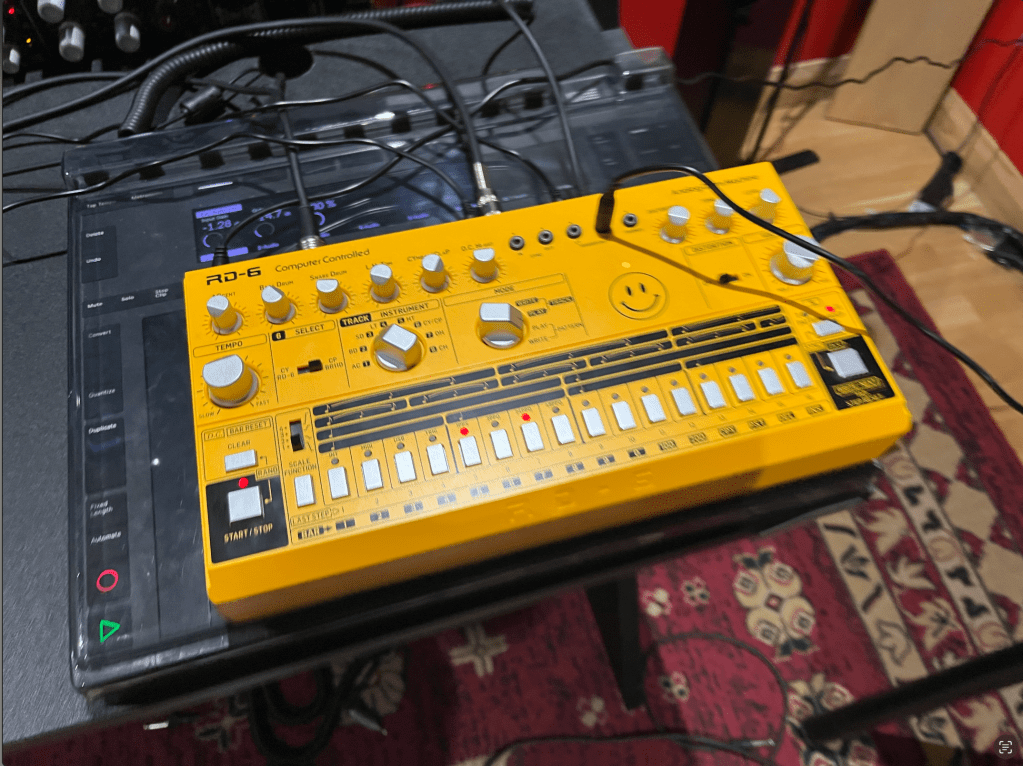
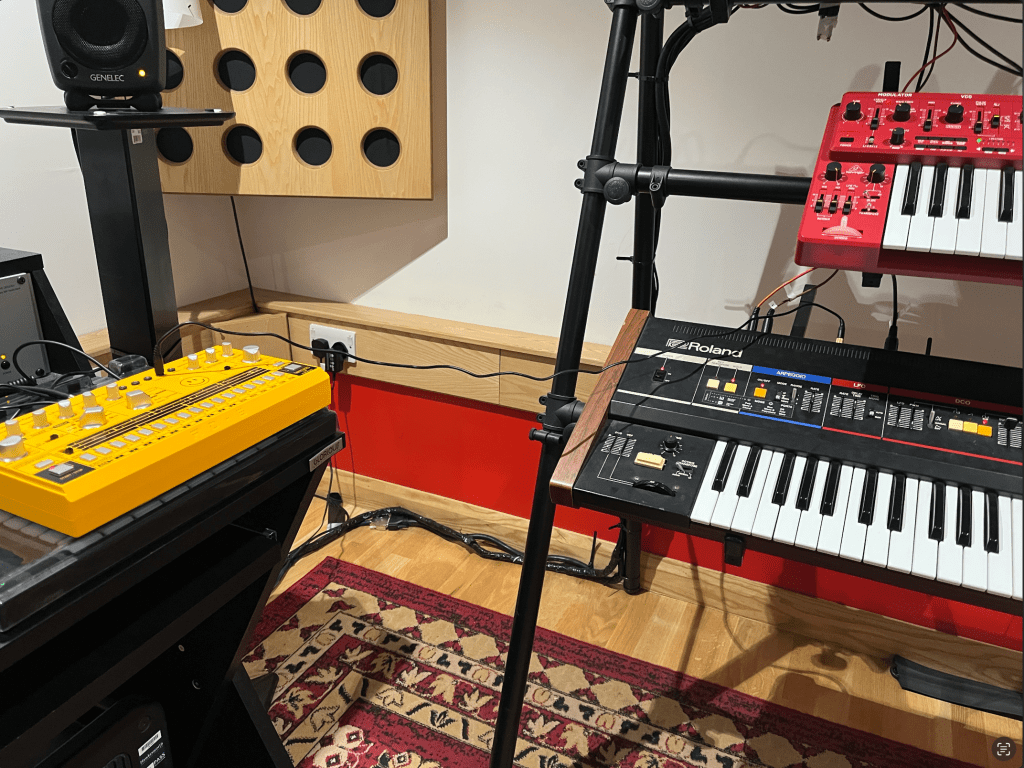
Whilst I have access to items like the Juno 6 (1984), Kawai K1R (1988), Yamaha SY85 (1994), Korg Electribe EA-1 (1998) and Tascam MSR-16 (1991), I will also use hardware emulations of vintage equipment, which should still provide a similar experience and sound to using the originals but at a more manageable price. Behringer clones use similar analogue circuitry to the originals, so similar behaviour is possible. I have access to hardware clones of the ARP2600, Roland SH-101 (2 versions Behringer and Roland Boutique), TB-303, TR-606 and guitar pedals that emulate older units Roland/Boss Space Echo and ProCo Rat.
Jun-606 (Experiments)
My first experiment with this vintage hardware provided some interesting results today. My goal was to use the old process used in the late 80s to sync the Roland Juno 6 synthesiser’s arpeggiator to an external source.
Mr Fingers classic Chicago House track ‘Can You Feel It?’ is my source of inspiration for this track and experimenting with this process. The track itself evokes personal nostalgia for me in an interesting way… it is a Chicago House anthem and one of the key tracks that defined the Chicago movement, which is powerful in its own right but I have looked inward to find why this track resonates with me and evokes personal nostalgia. It features on the Grand Theft Audio San Andreas video game soundtrack, there was a radio station in this game (SF-UR) that played underground Chicago/Acid House music from the time when the game was set, in the early 90s. ‘Can You Feel It’ was on this station, I can’t help but feel that some of my love for this music and nostalgic longing for this time is possibly triggered by my extensive gameplay here and at a time in my early teens when I was developing my identity.
This is the second-hand nostalgia that Wilson (2016) refers to, essentially longing for a time I wasn’t really around for but feel like I have lived this period second hand through the in-game character. There is also the fact that I played this game during a time in my teens when life was simpler (no bills or daily stress).
I want to re-create the nostalgic feeling of listening to this track by creating a track with the same sonic qualities.
From research I had conducted way before this project, I was aware that Larry Heard, producer of ‘Can You Feel It?’, used the Juno 6 as the main element and baseline for the track, he would likely have used a trigger out from his drum machine (sounds like he used a TR 707) to sequence the arpeggiator on the Juno.
With access to a vintage Roland Juno 6 and a TR606 drum machine clone, I could create a track in this way, triggering the Juno and clocking its arpeggiator from the tom drum outputs on the 606 clone.
From this first experiment, I couldn’t believe how well this emulated the characteristics of ‘Can You feel It?’, with the bouncy baseline, syncopated on the offbeat. One element that took me by surprise here was the extra sonic artifact that syncing the Juno this way produced, there is a low end drone like tone that the synth produces when the drum machine isn’t playing the pattern, it’s the same sound present on ‘Can You Feel It’, and when I think about it, is present on most Mr Fingers/Fingers Inc productions (Washing Machine, Mystery of Love), Larry Heard must have use the same equipment and process in all of those early tracks.
I thought this was an effect that he added intentionally to the tracks especially in ‘Washing machine as he uses this creatively to fill the gaps when the bass sequence isn’t playing… I know now that this is a by-product of this process and equipment. I wouldn’t find information like this without engaging in the practice here, this is the type of knowledge that only researching through practice can produce. I will try to keep elements of this by-product in my track, probably at the start of the track, like ‘Can You Feel It?’ It is worth noting that had I synced the Juno using the 5-pin retro-fitted MIDI input that this wouldn’t be present, it also is not emulate-able through software versions of the Juno.
Jun-606 Recording Session
Following my experiments yesterday, I left the setup in place in the studio for me to continue with this process today and to begin recording the track using this technique and technology. I connected the individual outputs from the TR-606 drum machine clone into an Ableton Live session to have control over each drum element when mixing at a later date, I combined this with the Juno signal on a separate channel.
I synced the 606 clock to Ableton over 5-pin MIDI as the tempo control on the drum machine isn’t reliable enough and would rather have this take a clock source and tempo master from Ableton. Having this more reliable tempo will make overdubbing easier later.
I was originally playing the individual notes in the sequence on the Juno but through experimenting, noticed that I could get the Juno to play interesting sequences by pressing down on multiple keys in quick succession.
After more experimenting found I could get even more interesting sequences by hitting multiple keys at the same time.
I would never have come up with a sequence and groove like this by working in the box or sequencing conventionally, this would have been fun way the guys back in Chicago in the 80s would have worked, I can’t help but feel a tad emotional here… I feel like I’m there in the moments when one of the most important movements in music happened, creating something special… I can get Ron hardy or Frankie Knuckles to play this in the Music Box or Warehouse… no, I’m here in 2025 when anyone can stick a couple of splice samples together on a cracked copy of FL with a Serum preset playing a melody from a midi pack… I have level of bitterness towards the complete lack of talent in this age when everyone thinks they’re a DJ/Producer and the lack of quality control with labels and tastemakers that accept this garbage… it is becoming clear why nostalgia is a strong emotion; the present is pretty irritating… innovation today is more of a quirk in musical terms than a necessity for success.
I decided to use some more of the analogue equipment available in the studio to try and add some extra life to the kick drum. The 606 has a really weak sounding kick so thought I would try and use some of the 500 series outboard gear to try and shape and colour the kick a little, some Neve EQ and Elysia Compression and light saturation.. tools like the Fabfilter ProQ software EQ weren’t available back when tracks like this were being produced so felt appropriate to use this hardware here. I really enjoy the physicality of twisting knobs and patching things in with the patch bay, rather than mouse clicking.. I find I feel more connected to the craft when producing using hardware its a more satisfying process and feel that too many young producers that only know the way of the DAW are missing out on this feeling, I try to encourage students at the college to use this approach as much as possible.
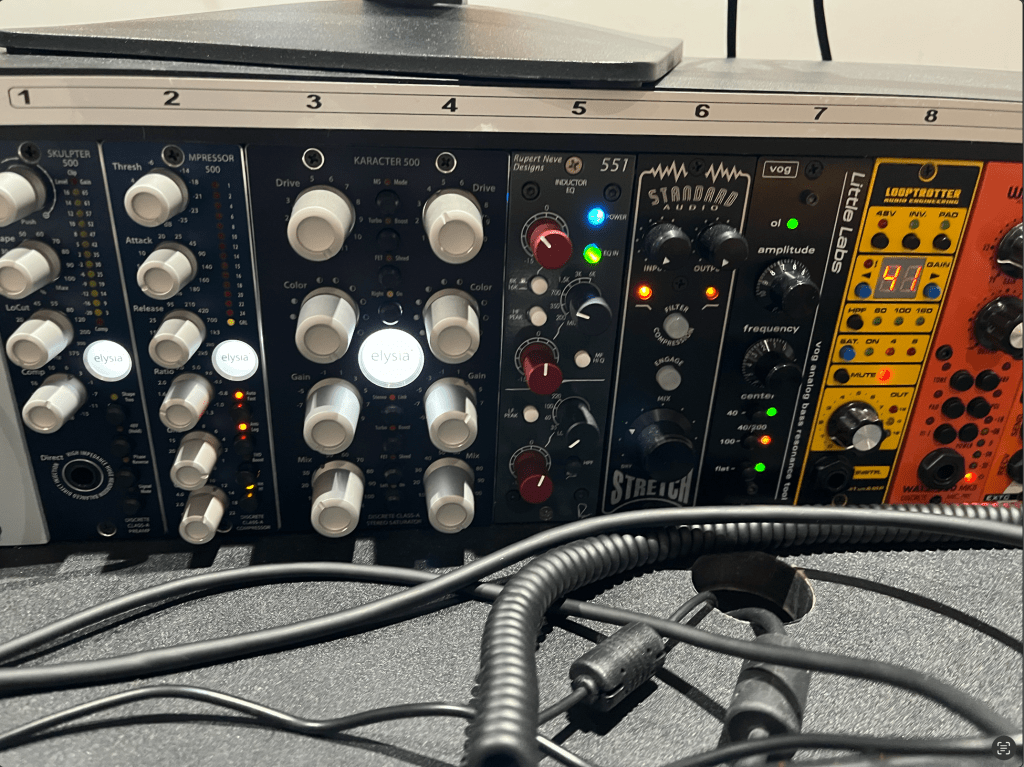
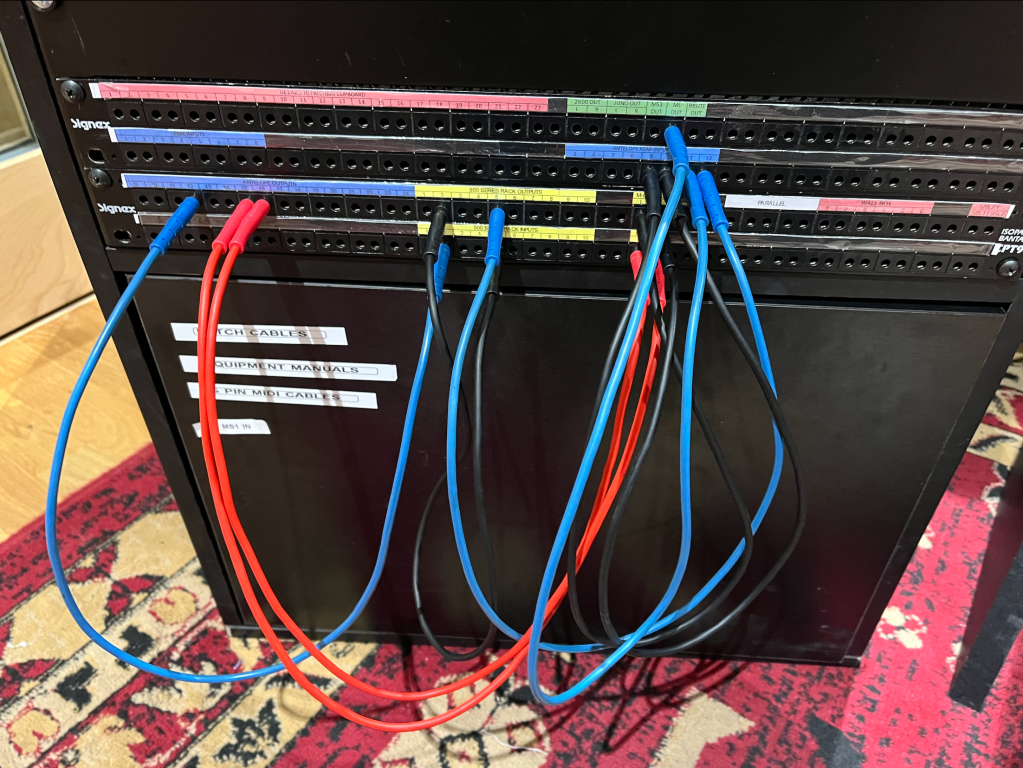
I hit record and jammed away with the 606 and the Juno, I tracked to Ableton for this session but treated the DAW only as a medium to record, like tape… but with endless takes possible, leaving the focus purely on the jamming process with the equipment. After a few takes I found a recording that I liked and could build upon with overdubs in my home studio at a later date.
Jun-606…. I can feel it.
Jun-606 (Overdubs)
Following my two studio days at NCL with the Juno 6, I now have the key elements in place for this Chicago inspired House track. I will now add some additional elements to this in my home studio. It is worth pointing out at this stage that my home recording studio features a good selection of hardware synthesizers, drum machines and other equipment that conforms to this old-school workflow I am championing. I have also taken a loan of a few pieces of equipment I have acquired through my work connections and set these up in my studio, the Yamaha SY85, Kawai K1r and an 80s Yamaha reverb unit.
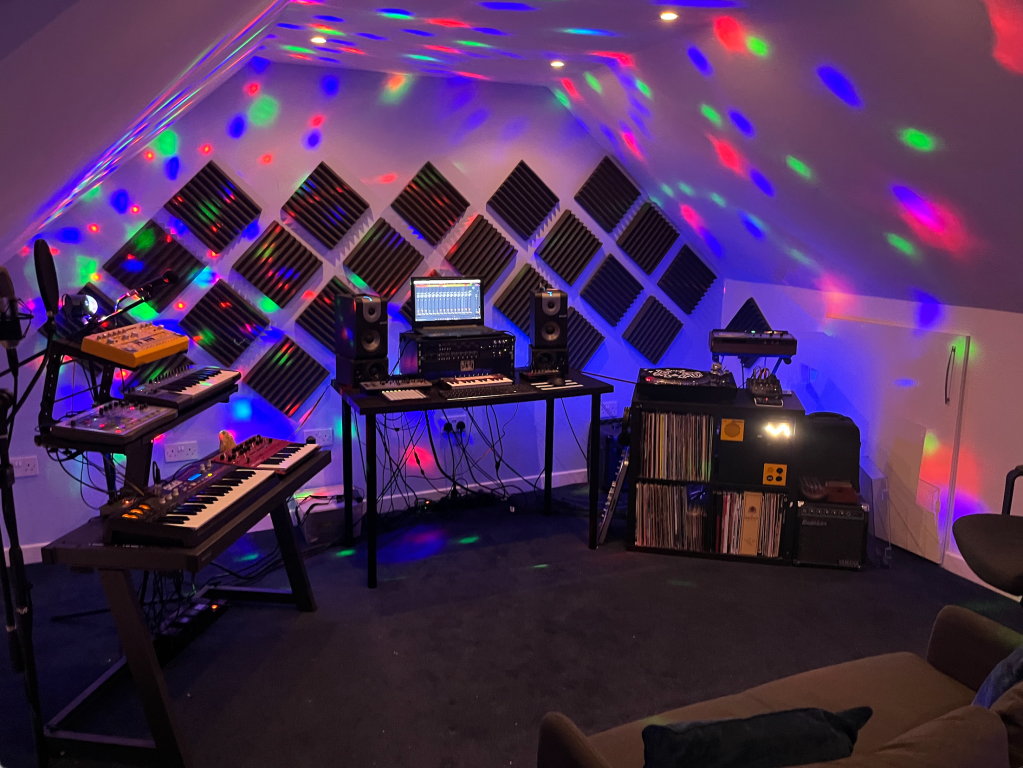
My first overdub instinct is to try and get some string/pad chord sounds over the track, in a similar fashion to ‘Can You Feel It?’. For this, I felt it was most appropriate to use the Kawai synth… I am trying as much as possible throughout this project to use sounds/equipment that would have been available and present at the time when the nostalgic inducing reference tracks were produced. The Kawai K1r was released and available in 1988, slightly later than the release of ‘Can You Feel It?’ but around in the time when this type of music was still being produced in Chicago.
I never fully tested this machine until now; I did power this up and checked it was working prior to this project but never explored the sounds available. I wasn’t too impressed with this and seemed very limited in terms of built in sounds and sound design on a machine like this looks way too convoluted and difficult for me to even attempt creating patches with this… I see it more a preset machine, and the presets are pretty rubbish.
These machines use expansion cards to loud up more sounds and feel like to get the best out of this machine I would need this expansion. Using the best string/pad sound I could find with the build in machine memory, I put together some chords that I felt worked with the track. At this stage I noticed a strange issue, artefact in the sound. There was a digital clicking sound, from years of sound production and work as a studio technician, I can easily tell that this is a clocking/digital sync sound. The synth itself is only synced over MIDI, and this shouldn’t introduce this clicking, my instinct tells me that the machine itself has an issue.
Realised what the issue was, the second pre-amp I was using wasn’t correctly connected to my interface over ADAT and just needed re-seated. I managed to get rid of the clicking sound now and with a little bit of external processing with the June-6 chorus pedal, managed to create a sound that I felt happier with.
it seems like working this way, with this hardware, I am constantly troubleshooting and required a level of decisiveness. The process of finding an appropriate sound using VST instruments has pros and cons compared to this method, with VSTs it is easier to search for a sound and find something that works but there are so many options this way that you can find yourself sitting for extended lengths of time just previewing presets. With this hardware, there were only a handful of sounds, so less options but also less time searching… you commit to a sound and make it work.
Jun-606 (Overdubs, Continued)
Coming back to this session after a night’s sleep, I am not happy with those chords I recorded last night. The sound itself is fine, the strings from the Kawai routed through the chorus pedal sound great and appropriate for the style of track, I feel like the chords themselves don’t work with the baseline, they are in the same key but feel like chords in general don’t seem to work with the Juno base I recorded… it isn’t necessary for me to use chords here, I’m not recreating ‘Can You Feel It?’. Instead, I think some synth notes that follow the Juno pattern would work better. The Roland SH-101 was key workhorse synth during the Chicago House days; I have the official Roland Boutique hardware clone of the SH-101 and feel this would suit the aesthetic of the track. Like the Juno, the SH-101 (and subsequent clone) have a very appealing and user-friendly interface, it’s very easy to use subtractive synthesis and create sounds from scratch using this synth.
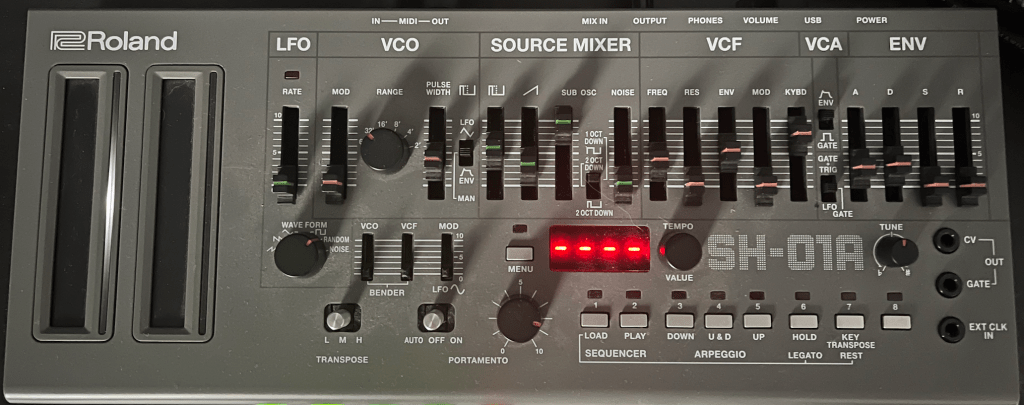
I created a short, plucky style patch on this synth, and routed through the Boss Space Echo pedal (Emulating the Roland Space Echo tape unit) and programmed a pattern that complimented the Juno pattern.
The Space Echo produced a slight and subtle feedback drone that works as a nice bed in the track but also has me thinking of potential chords that might work with this track, the resonance from the feedback and tone created has influenced my brain into imagining a chord sequence that could work with this track.
Before exploring chords that could work here, I felt that the track needed some samples. ‘Can You Feel It?’ has the ‘House Speech’ sampled throughout the track, I didn’t want to do the same and find a similar speech but felt like spoken word would work better than singing on this track. I found an interview with Frankie Knuckles discussing the term ‘House Music’ and a downloaded a vocal sample pack from Robert Owens, original member of Fingers Inc. and vocal collaborator of Larry Heard. Having his voice present in the track just adds to the old-school Chicago vibe I am aiming for here and reinforces the feeling of nostalgia.
This project involves producing more songs than this track and as such it is important to decide when to move on to another track and move my focus. I would return to this track later, potentiality add some chords, transition sounds, more samples and mix this better but for now it is sitting in a place where it makes sense to move on. One last thing to fix before moving on – the kick. The kick on the 606 is so weak, even with the additional processing, I decided to reinforce this kick with a TR707 kick drum sample, the drum machine that Larry Heard used, this kick just pokes through the mix better… I’ll keep vigilant of using the 606 clone and its kick drum in other tracks.
Underground Habits (First Session)
This project requires swiftness with turnaround time for the tracks and made an executive decision to leave the previous track (Jun-606) as it were and move onto another production. Rather than working chronologically through the album, I have decided straight to work on what will be track 7 of the album. There is no reason for this, I felt that I was inspired at this time to work on this type of track.
The basis for this track is essentially what you might find ‘vampires’ raving to in a 90s underground club. The movie ‘Blade’ and the opening scene dubbed the ‘blood rave’ scene has always left me in awe since first watching as a child, not just the visuals, which were the coolest thing ever for an 8-year-old that really shouldn’t have been watching, but the soundtrack… the pumping distorted acid baseline.
’I’ve always had a connection with the 303 sound, growing up it was subliminal… a sonic backdrop growing up in the 90s. Looking back now, it was everywhere. It was in movie soundtracks, adverts and video game soundtracks, I remember the old PlayStation Magazine Demo Discs blasting acid techno during the selection screen.. there was an obvious decision in mass media at the time to utilize this sound and the features of alternative/underground rave culture to appear and promote their product as edgy. I had an awakening of this deep childhood connection with the 303 sound when I visited Berlin as an adult, the nightlife there and industrial underground nightclubs physically manifested this culture I had experienced through media as a child and made me feel at home.

The soundtrack of the 303 in Berlin inspired me to use this sound in my productions.
What separates acid techno and this type of TB303 sound from the 303 sound in traditional acid house is the use of ‘colourisation’ and processing. Routing the 303 through equipment like distortion pedals, tube pre-amps, guitar amps or anything really that can provide distortion can change the 303 from a squelching sound to screaming roaring sound, the filter and its high levels of resonance works perfectly as a source for distortion.
This will form the main experimentation of this project, colouring the 303 the create this screaming, raw sound and to also use the same approach to make the kick drum more aggressive. Techno and acid techno are defined by the kick drum, a big TR909 kick drum usually coloured with distortion and a level of pulsing reverb.
With this level of importance placed on the kick drum, this is the best place to start. Unfortunately, I don’t have access to a TR909 or hardware equivalent, but the 909 drum rack within Ableton Live is very accurate software emulation and I was using hardware to colour the kick from this rack, so the vibe and feeling of a real distorted 909 kick should still be present. I routed the kick sample from my audio interface to a selection of FX pedals to experiment and shape this kick.
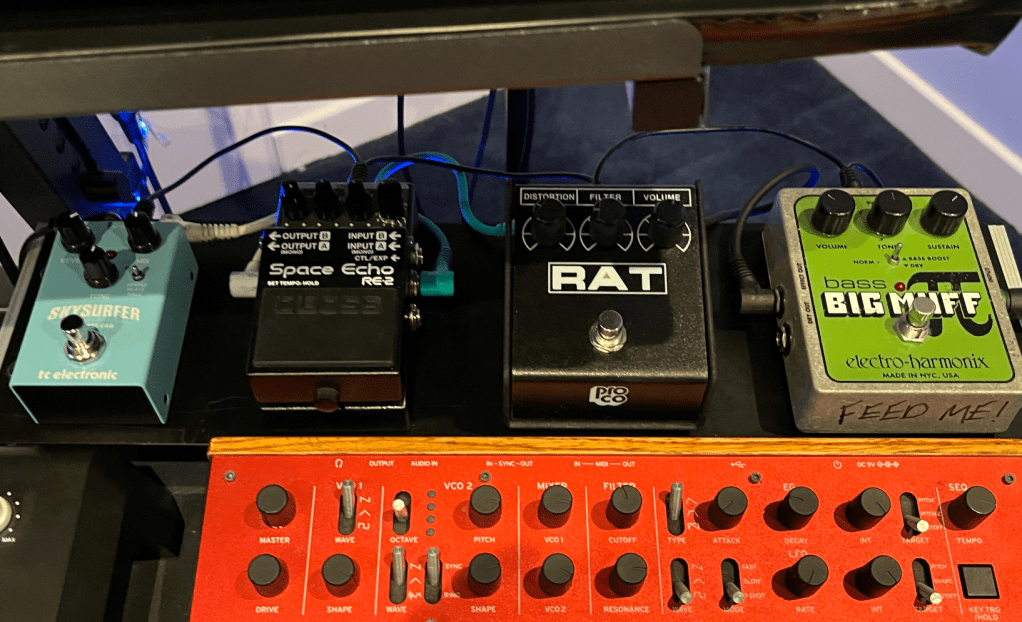
Before sending the raw sample to the pedals I did a little ‘in the box’ processing, a little eq, compression and slight saturation to make the kick fuller sounding prior to external processing to get the best out of the pedals.
I love using equipment that’s been designed for one thing and using it for a completely different application. There’s nothing that says you can’t route a kick sample through guitar pedals, if you limit yourself to just using things the conventional way then you limit yourself the possibilities of new discoveries. The way technology can be used like this and my curiosity with how studio/audio equipment works has led me to my current job role as a sound technician, I love getting into the inner workings of equipment. The tacit knowledge I have gained in this job role and through years of sound production study have provided me with the ability to recognise if something could be compatible… simply plugging outputs to inputs and outputs to inputs may work in some cases but knowing the difference between balanced and unbalanced signal, high and low impedance and potential dangers that may be inflicted on equipment if not connected correctly, allows be to experiment safely in the studio.
Underground Habits (Second Session)
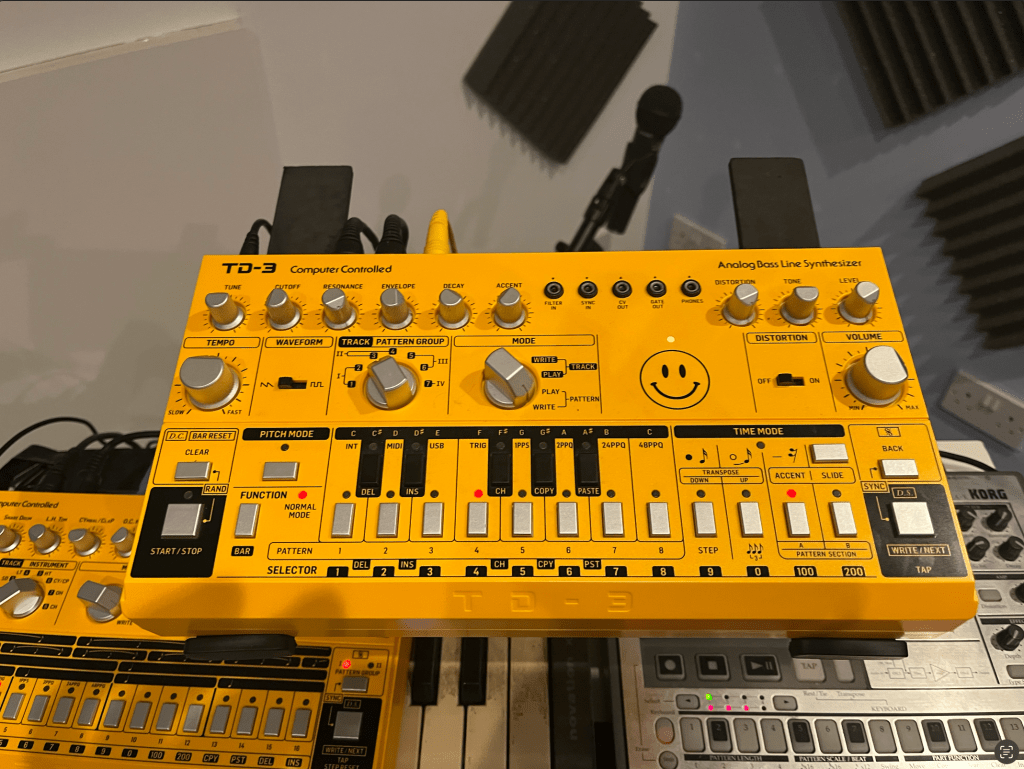
As this track is inspired by sound from the mid to late 1990s and my nostalgia for the sonic palette of this time, manifested in acid techno, I have decided to use only equipment (or clones/emulations) that would have been used in these productions at this time. The TR909 takes care of drum responsibilities here, using the Ableton rack with additional external processing. I have a Behringer TD-3, TB303 clone, which uses the same analogue circuitry as the original 303 that will take care of the acid baseline with FX pedal processing adding the desired colourisation.
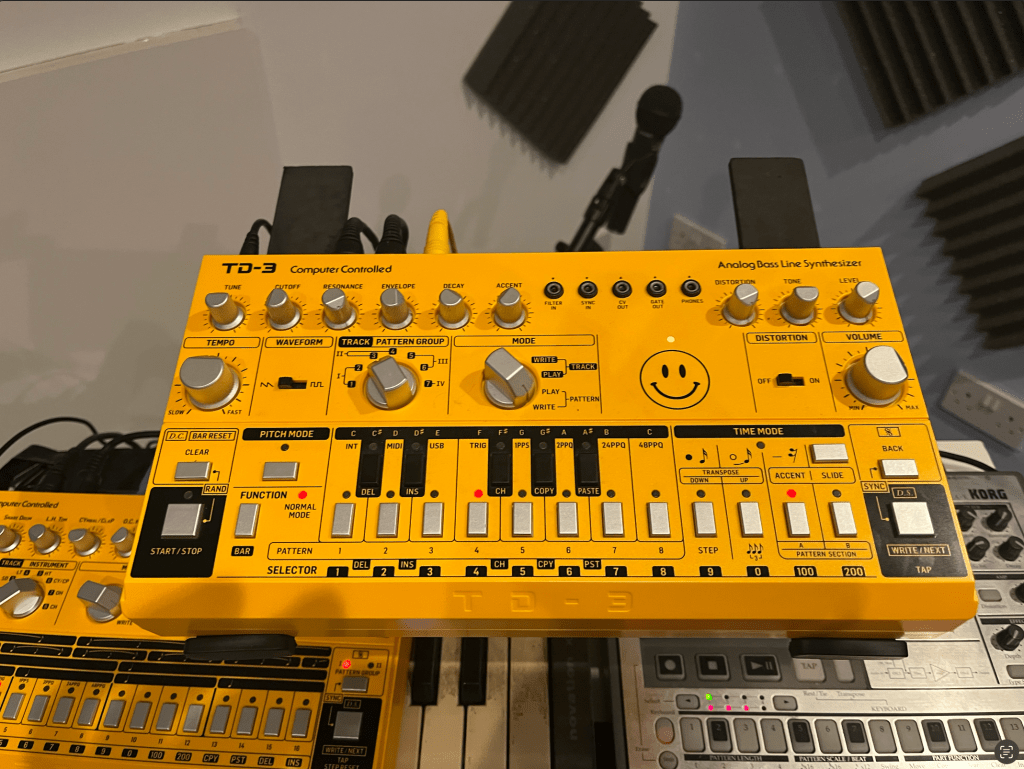
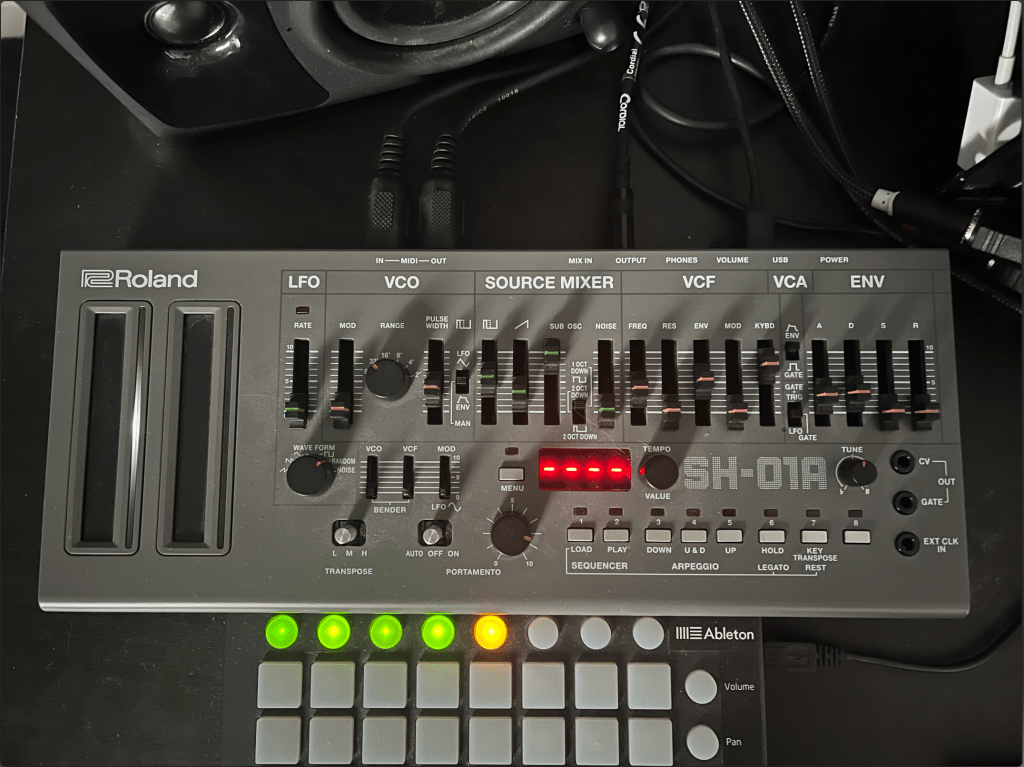
The SH-101 has been a staple synth in electronic dance music since the 80s and works really well combined with a 303 to fill in the lower base frequencies that a distorted 303 loses, I have a Roland Boutique digital hardware clone of the SH101 that uses very authentic ACB (Analogue Circuit Behaviour) to emulate the original analogue synth.
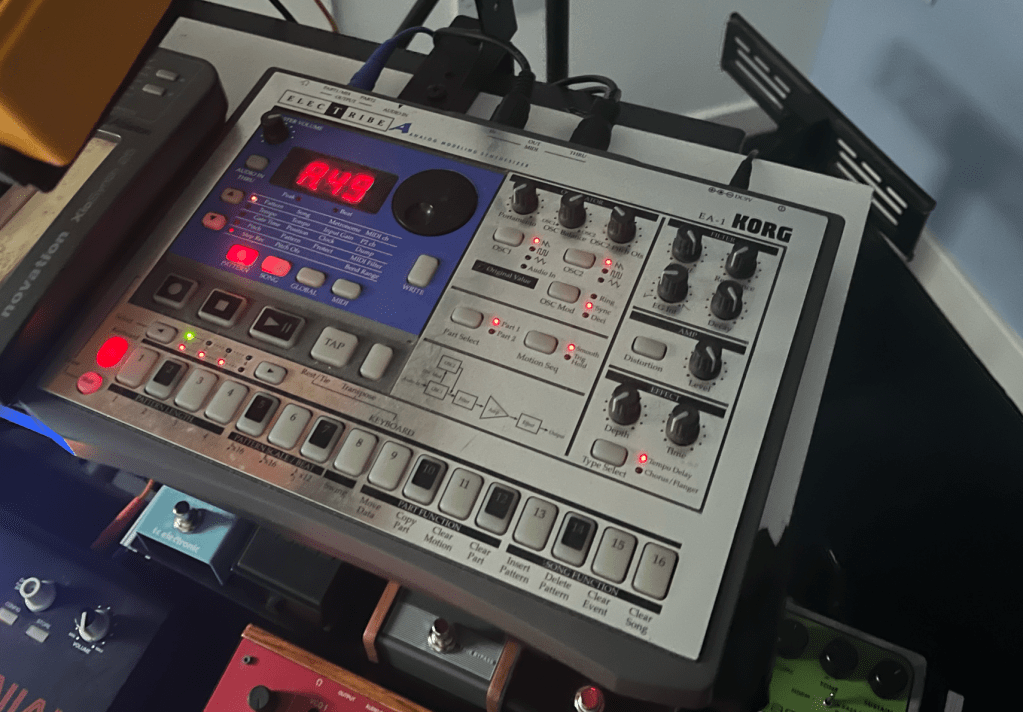
I have access to two original pieces of hardware from the 90s that would have been present in these original techno tracks. I own a Korg Electribe EA-1, an analogue modelling synthesiser from 1998, whilst not the most versatile synth I have in my collection it does possess a certain charm. The presents and sounds ooze of late 90s techno and trance, this will fit perfectly with the vibe I intent to explore here.
The other piece of equipment from this era is the Yamaha YS85, which I have acquired a loan of through my work connections for this project.
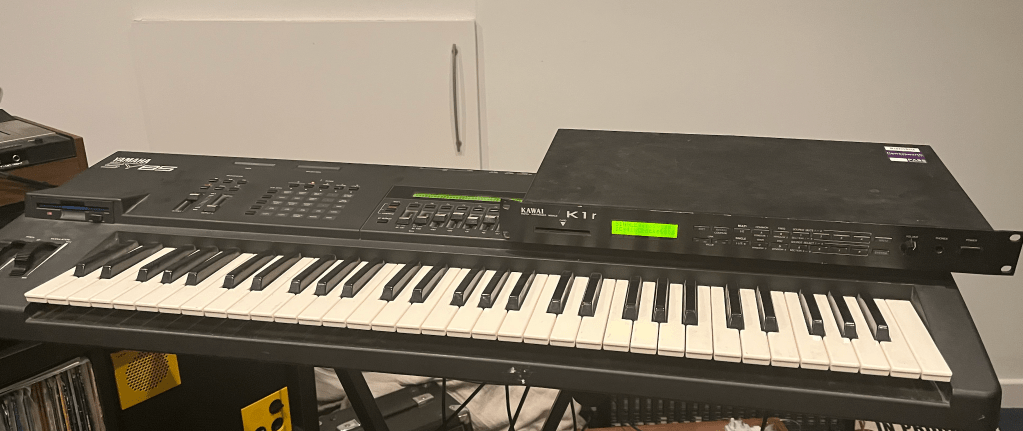
This is a Rompler and uses sounds from floppy disks which can then be manipulated using the synth engine to shape the sound of these samples.
There is high level of nostalgia using the floppy disk here, as mentioned previously, it reminds me of using this technology as a child to play video games on old Windows machines. I have been old there is a way to mod this machine to allow you to use a USB stick with unlimited sound sources instead of the floppy disks. Personally, I would be against this, even though it gives you more choice and possibilities, it takes away the aura of using those floppy disks.
After setting up all the equipment in my home studio, I set the environment up in a way that creativity would flow naturally for me. All the equipment was synced to my Ableton session, all the equipment was routed to specific channels in the session and from here I just started jamming away. For this track I sequenced everything in Ableton, in a future experiment (Factory Reset) I sequence the track externally, without Ableton or any software but for this track the I would avoid the tedious 303 sequencer.
The following is the result of this jam session with the equipment.
Each piece of equipment worked well together here and filled a specific sonic role in the production. It is worth noting at this stage that I used presets on the YS85 and Elecribe EA-1 rather than designing the sounds myself from scratch (which I did do with the SH101 clone)… I have no problem using presets, some of the biggest and most iconic dance tracks are based on presents, my musical hero Liam Howlett from The Prodigy openly and shamelessly uses presets (Voodoo People uses a JD-990 preset as it’s lead).
My main source of colourisation and distortion on the 303 here was the PrCo Rat 2 pedal, a re-release of the original Rat pedal that was a staple for acid techno producers to produce the iconic screaming 303 sound.
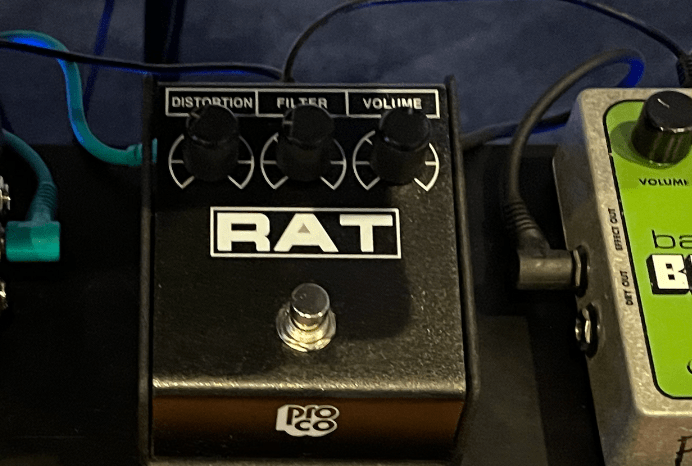
I structured the track in a similar way to some reference tracks in the genre, including the Blade soundtrack, New Order – Confussion (Panel Pump Remix), and added a spoken word sample that I extracted from HG Wells ‘The Time Machine’. The sample is copyright free as this novel is in public domain and the audio was taken form a royalty free audio book recording. I would move swiftly on to the next track now but return to this track along with the other track Jun-606 at a later date to finalise and mix.
Behringer/ARP 2600 Experiments
For one of the tracks in this project I wanted to expand on a previous track I had produced back in 2016. This pervious track was inspired by early Chicago house tracks and used an arpeggiated synth line as the main hook, this version was produced entirely ‘in the box’ using Ableton Live and some software synths. My goal with this new version is to create a track in a similar vibe, using the arpeggiation driven Chicago anthem ‘You’re Love’ as inspiration, but to use hardware synths instead. I have access to an ARP 2600 clone through my work and have wanted to utilise this in a production for a while and feel that this could produce some nice, short and snappy sounds that would work well in an arpeggiated line.
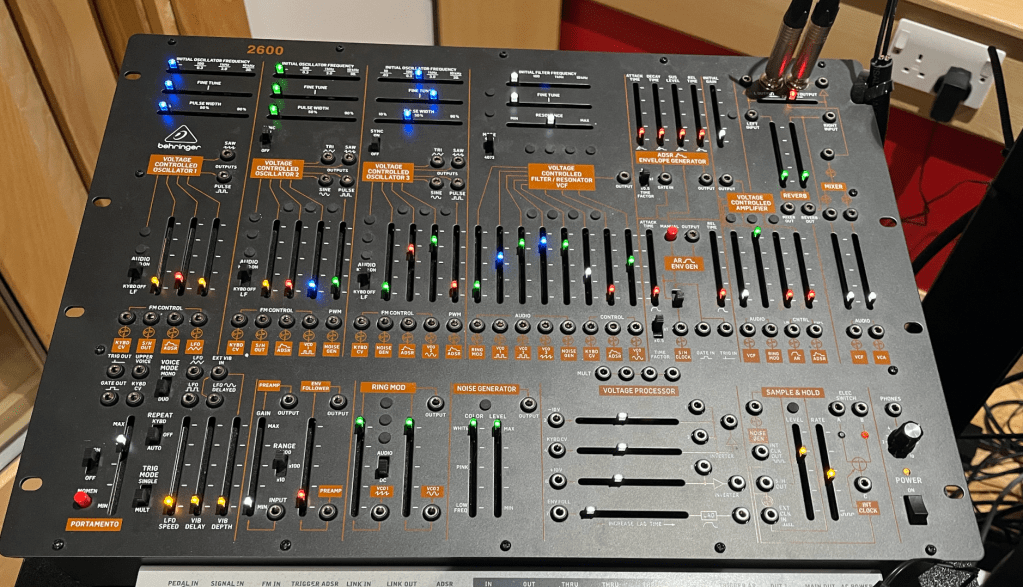
The original ARP 2600 would have been around back when ‘You’re Love’ was produced… though this would likely have been seen as a luxury and high end synth back then, with a price tag that probably left this out of the arsenal of the Chicago house producers back then… regardless, I have access to one (a clone of one) and want to experiment with this here.
I decided to test the 2600 and its capabilities/usefulness for this track by sending a sequenced arpeggiated loop from Ableton over MIDI into the synth and try to create a patch that worked and suited this vibe. I was instantly met with a degree of troubleshooting and problem solving to get the synth to produce sound.
The issue here was that the sample and hold section of the synth was being used as a clock source rather than control over the keyboard/external control, there was also an issue where the envelope wasn’t controlling the filter but managed to find the switch which allowed for this. The 2600 is a ‘beast’ and requires a large understanding of how synthesisers work and what each section of the synth does, I have a good knowledge of synthesisers and create sounds using synths but even I feel a bit lost using this machine. With technology like this the only way to understand is to sit with the machine and try each of the parameters. I eventually got the 2600 to play the arpeggiated line and used the envelope to shape the sound but noticed a weird glitch that was happening when playing the sequence where every so often he first note would be missed and would cause the sequence to play in a different rhythm.
The 2600 is really cool and the possibilities for sound design are vast, but there’s so much to this synth that I am finding myself troubleshooting more than creating. Just using basic subtractive synthesis, without any additional patching, and sending a pre recorded MIDI sequence from Ableton should be a fairly simple exercise but there seems to be constant little issues or parts of the synth engine doing something unpredictable, I’m not sure if this is a 2600 issue, an issue with this particular machine, or something I am doing. At this stage in the experiment, I have spent a whole day with minimal success just trying to create a basic patch. I’m doubting whether to use the 2600 for this track anymore, when using technology.
There’s a part of my mind that is thinking about the 2600 VST plugin clone that I have, it would be easier to program and as it is based on code there’s less chance of issues like this, but I really want to use the hardware, there’s an extra feeling of accomplishment and satisfaction I feel when using physical equipment.
I will move on and start work on another track for the moment but will return to the 2600 later to try again with optimism.
Factory Reset – Background
The next part of this project involves creating a track fully out of the box, using hardware synths and drum machines with patterns written using the internal sequencers on the machines (no Ableton) and tracking this to 16 track tape. I am very excited about this project as it should immerse me in the world of dance music production in a pre-digital/computer age. I often feel that sitting at a computer, sequencing in a DAW and creating music this way makes me feel less like a musician.
To fully escape the DAW and embrace the ways of the old should provide a feeling of liberation and provide a level of context and respect for the craft of production in the 80s/90s.
The piece of music I am using as a nostalgic reference here is Voodoo Ray by A Guy Called Gerald. This acid house anthem instantly makes me think of the second summer of love and the old Hacienda nightclub in Manchester. Like all the other tracks in this project that evoke nostalgia, I wasn’t present first hand in this moment, instead there is a piece of media that has tricked me into feeling nostalgic about this moment. There is one piece of media that comes to mind and features this track and the backdrop of 1988 Manchester. 24 Hour Party People, a movie that follows the story of Factory Records and at one stage in the film focuses on the Hacienda features Voodoo Ray during a nightclub scene.
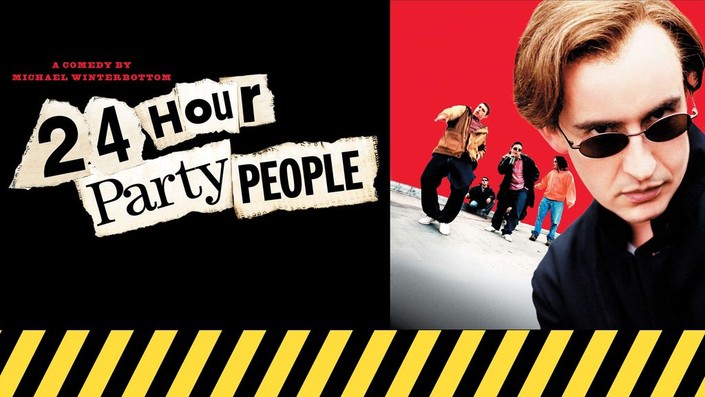
I know for a fact that this film was one of my introductions into the world of acid house, I watched this in my early teens around the same time I was playing GTA San Andreas and had started listening to The Prodigy, developing a fondness for electronic music… all the pieces formed perfectly to create a world that I felt I belonged to, a world that I never got to experience first-hand but constantly visit subconsciously.
I have decided to call this track Factory Reset, in honour of Factory Records and Fac51 – The Hacienda.
Factory Reset – Preparation
‘Voodoo Ray’ succeeds due to its simplicity, a TR-808 Drum machine with only a few pattern changes, an SH-101 shaped into an almost percussion like and metallic sounding baseline, a subtle TB-303 acid line and a haunting female vocal chant. This simplicity is ideal for the out of the box style production I plan to utilize and explore, I have TB-303 and SH-101 hardware clones and can achieve similar style drum sequences using my TR-606 clone and my Korg Volca Beats drum machine.
A large amount of preparation was required before spending any time in the studios with the tape machine. I had to write the track and sequence all of the elements on each piece of hardware so that I would be ready to perform the track in a jamming style to tape.
The driving force in Voodoo Ray is the SH-101 sequence, this is where I would start building the track from. I started playing some notes on my SH01a (SH-101 Clone) and shaped the synth to create a patch that had Voodoo ray vibes and began the process of sequencing a bassline using the internal sequencer.
After a couple of failed attempts to write the pattern the way I had it in my head, I decided to try something a little leftfield, my brain knew what the pattern should be played like but needed a visual way to express this and understand where the rests should be and how many rests there should be.
This was my way for writing down the sequence in a way that I could follow and understand that I could then use to sequence in the pattern.
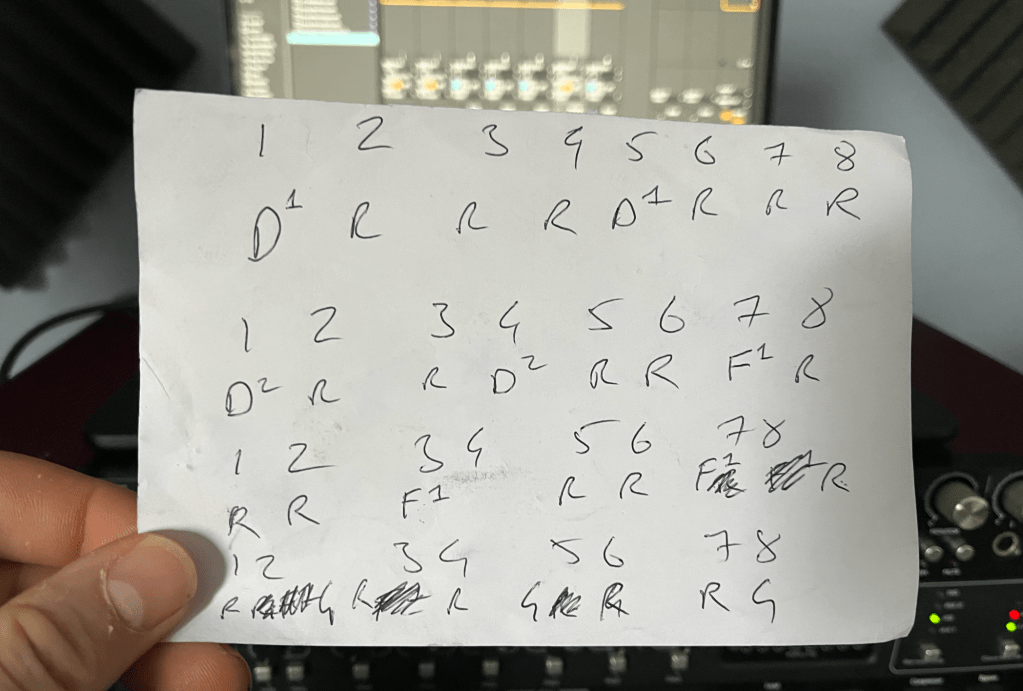
I decided to extend the pattern from 32 steps to 64 steps with the final G in the sequenced replaced with an A.. the 32 steps sounded a little too repetitive for me and knew that there wouldn’t be many changes in drum patterns and the 303 line was only going to be 16 steps, I simply used me cheat sheet again and repeated the first 32 steps but replaced the last note.
I feel much more confident using the sequencer, just getting my brain working with the visual aid helped initially but kind of have a feel for the sequencer now. It really is a case of just getting your hand dirty when it comes to working with hardware like this, prior to this project I have just been lazy… it had taken me the best part of an hour to get this baseline how I wanted and know this would have been a 2 second job to sequence from Ableton… the issue with sequencing in a DAW though is the flexibility, had I sequenced this in Ableton I may have eventually decided to alter the notes or timing and slowly drift away from the initial idea, the hardware sequencer and the process of sequencing provided a level of satisfaction and pride, the simplicity of the bassline is overlooked here.
Speaking of sequencers, the TB303 (TD3) sequencer is a whole other world, one of which I would now delve deep into. I won’t give a history lesson here; the 303 sequencer is notoriously difficult to use… if you have a pattern in mind that you want to replicate with the 303, there’s a good chance it won’t come out the way you planned, the pattern will end up sounding nothing like it… but that there is where the charm of this device comes into play, the sequencer may produce something that your mind would never have imagined. I have tried this sequencer before and have had outcomes that surprise me in good ways and bad ways, there’s a level of lottery here for me.
My plan was to use this to my benefit, I wasn’t sure what I wanted the 303 sequence to sound like, I just knew I wanted something in key with the SH101 and 16 steps.
The 303 sequencer is 1 part magic and excitement and 3 parts frustration, for every good sequence you produce there’s another bunch that sound terrible but when it works it works so well, if this synth did what it was told then we wouldn’t have acid house, it is rebellion in technology form, the punk rock of synthesisers. That’s why I love it, even when I hate it.
After a good few attempts, I did manage to get a sequence on the 303 that worked alongside the SH101 pattern and some drum patterns on the drum machines and was ready to take the rig on the road.
During the following video I noticed something in my setup I was unaware of, the 303 was being routed through a chorus pedal… this isn’t a move I would usually do and had only wanted the 303 routed through the Space Echo and Reverb pedals on my board but accidently had the chorus pedal engaged.
This was a nice surprise, it added something to the 303, with the track being as minimal as it is, there is plenty of space for little extra production moves and effects like this, these are the happy accidents that this project celebrates.
There was a lot of work put in over the course of the day to get this track ready for the studio, a feel proud and excited about this track, there’s a feeling of connection with the producers of these older tracks and the tracks themselves when you produce music in a similar way. There were moments though through the day when things weren’t clicking for me and I felt really down, and questioned my own skills but once it started to click, I got lost in the moment, it really was a Csikszentmihalyi ‘Flow’ experience.
Factory Reset – Tape Day One
With all the pre-production and planning complete it was now time to record to tape. I have been wanting to create a record this way for so long and is a key factor in my decision to start this project. I had recorded to tape before for other people’s projects; I have taught students how to record to tape but never fully recorded this way for my own music. I did record to a stereo quarter inch tape for a previous master’s module but in that instance, there was no scope for mixing the track or adding overdubs. As the tape machine I am using for this project is a 16 track, it means I can record all the elements to separate tracks and can record overdubs and additional layers of sound over the initial elements.
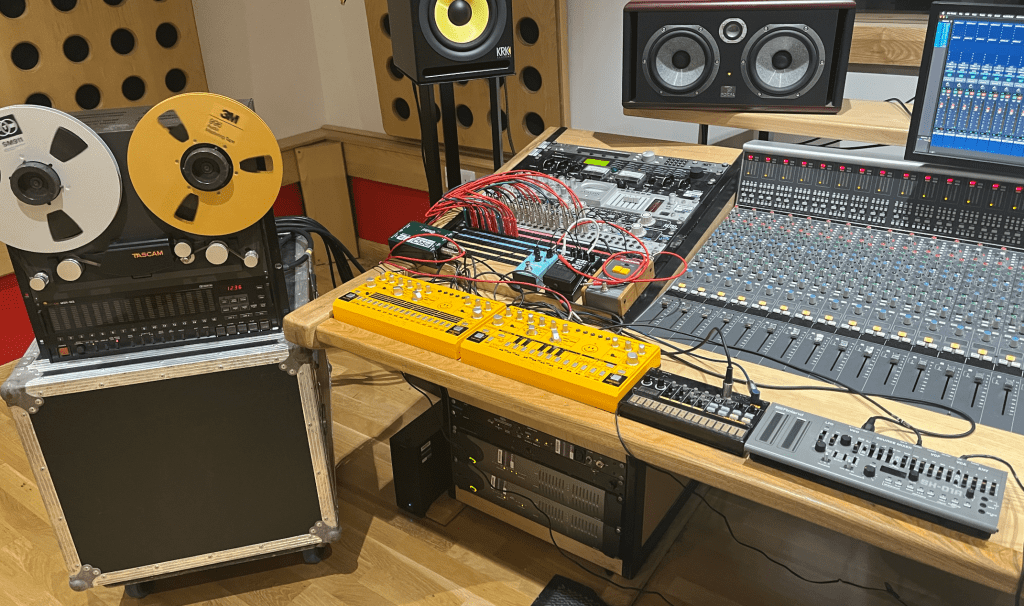
I hooked up the rig I brought from home into the SSL console and made sure all the equipment worked here.
My knowledge of the studio here really comes into play, knowing how to use the SSL desk, the routing required allows me to be fluid in the studio and work fast. I have the benefit here of being the studio tech, knowing all the tricks and ways to use the desk and equipment, this project may not be as easy for someone without the tacit knowledge I have gathered from years of technician work.
Before recording to tape there is the matter of cleaning. I am very familiar with this tape machine and know that the tape heads will need cleaned before use. This is a piece of maintenance that needed to be performed before any big recording session in most instances and is all part of the overall process.

As the studio technician, it is my job to make sure the studios work properly, and I have the authority to take apart the studio to fix any issues. After setting up the tape machine there were multiple stages of troubleshooting and repairing required, there were a few bad connections on the patch bay and a connection on the tape machine that needed attention but was able to quickly resolve this, it helps to be the tech.
At this stage in the day, I was finally ready to record, it is worth noting that this was around 2pm in the day. I had spent around 5 hours just getting everything ready, it really does require a lot of dedication and tenacity to work this way.
I started a few test recordings to check how everything sounded when tracked to the tape. The Tascam MSR-16 doesn’t have a way to monitor record head during tracking and requires you to record then rewind and play it back to hear the result, I quite enjoy the surprise of what you get when you play it back.
Before doing a ‘proper’ take, I wanted to record myself doing a ‘throw away’ recording just for the sake of recording the process, for the proper take I would need focus and both hands free. The first video below is the ‘throw away’ recording.
Following this take I recorded a few ‘proper’ takes. The tape allowed for around 40 minutes of recording so knew I had scope for a few takes to choose from.
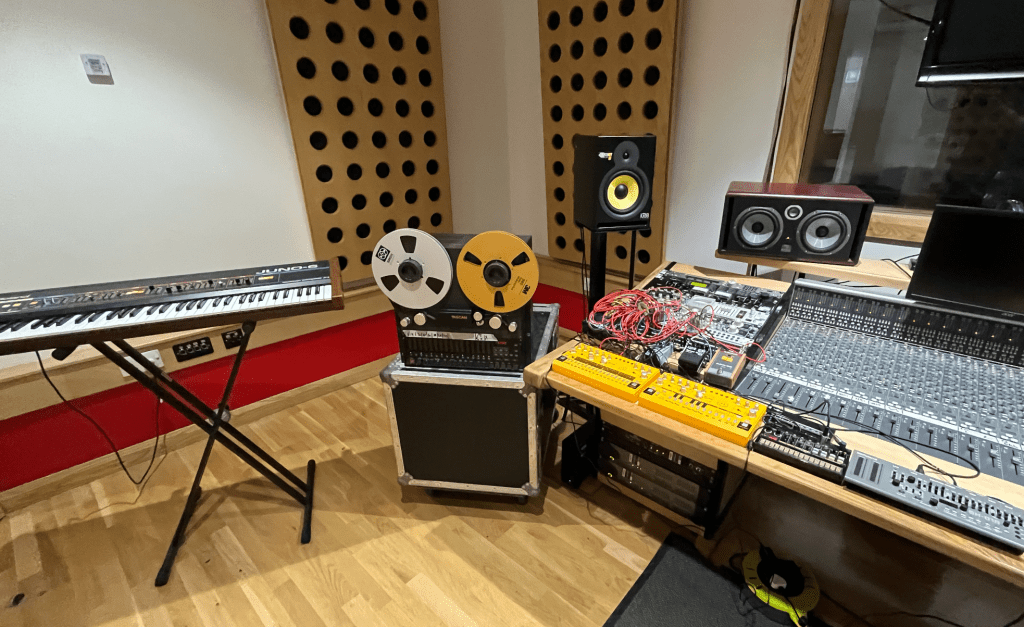
After recording the initial parts (kick 1, Kick 2, Snare, Clap, Hi Hats, Toms, SH101, TB303, wet channel for FX pedals and stereo wet channel for Eventide reverb) I had 5 channels for overdubs. The plan is to record stereo Juno-6 chords and the vocal sample, then the other two channels are free for any extra overdubs I may need.
Looking back over the day, there was a lot of troubleshooting, and a lot prep and only a small amount of time for recording, I knew the studio would be free for the next few days so there was a safety net and less stress if I never finished this initial recording, I think that reduction of pressure and stress allowed me to work in a manner that required some urgency but a with some freedom. I usually find that my creativity can suffer with too much pressure on time.
Factory Reset – Tape Day Two
Before recording the overdubs there was the matter of tape head cleaning. I gave a playback of the recorded take for the other day and noticed some fidelity issues on a few channels.
I decided to change the chords I was planning for the Juno; I just felt that the previous chords didn’t fit the vibe of the track. I also must clarify now that I do not have a hardware sampler, it is one of the only pieces of equipment that I do not own, have access to or thought about trying to borrow, I have to use a DAW… but I have set this up in a way that replicates the process and feeling of using a hardware sampler, I have an Ableton Push controller and Serato Sample VST and once I loaded the samples into the VST sampler and mapped this to the push controller, I then closed over my laptop and proceeded to use the Push as a ‘faux’ hardware sampler.
I recorded the Juno chords first, and this was a challenge. Now a challenge from a technical standpoint, the Juno worked fine, the tape machine worked fine, the chords fit the track. The issue was me, as a musician. I had become too reliant on midi sequencing and quantisation in the DAW that I lacked the natural ability to play the chords correctly and in time. I didn’t record a click track either and would not be able to sync one to the tape recording, I had to play the kick drum super loud and focus on this rather than the groove of the track. After more takes than I am proud to admit I managed to get a good take down.
Playing the sample was easier and managed this in a couple of takes. I feel that my live playing skills need to improve, it has never been an issue before as I have the DAW to fix my mistakes.
This is the track with overdubs complete
Nicely labelled up desk and tape machine, an important detail I should have mentioned earlier, in the studio, masking tape is king.


If someone was to use the desk and tape machine whilst in was still in the process of working on this track I can simply peal the masking tape and set this aside somewhere safe, then re-apply when I’m back into studio.
Factory Reset – Tape Day Three
I still have two channels free on the tape for overdubs, I have a vague idea for a synth line to go over the top of a section using the SH101 (the Behringer clone this time) and I’m thinking about finding a sample uses the phrase ‘factory’ or ‘factory reset’ and playing that in every now and then.
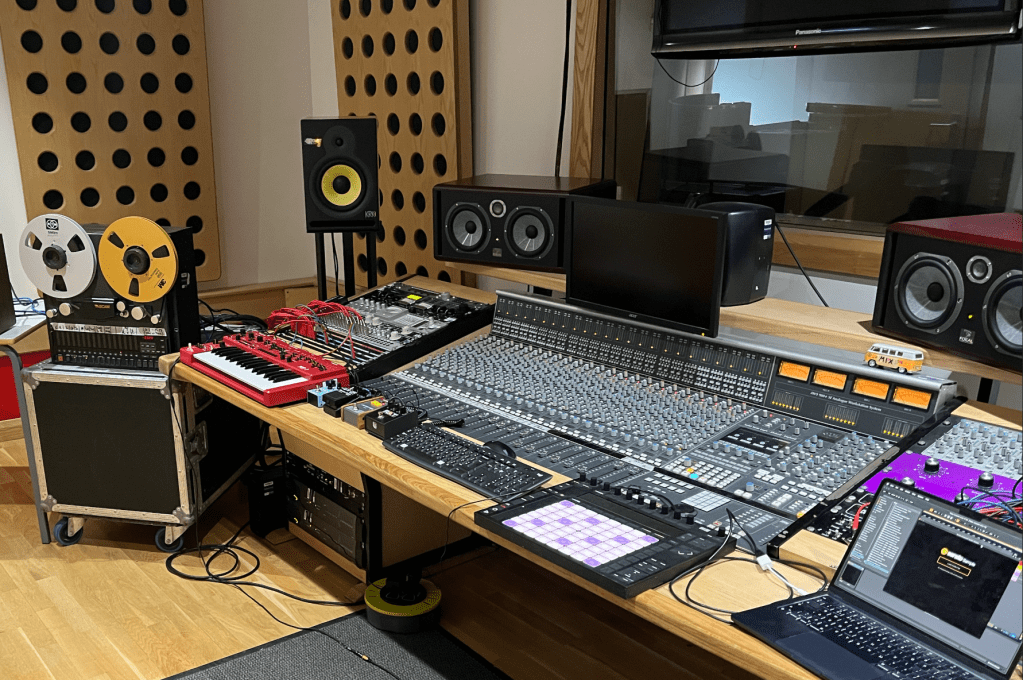
I spent most of the day trying to work a melody/synth line with the MS-1 (SH101) but nothing seemed to work, I also struggled to find a sample that suited the track. After spending/wasting more than half of the day with these possible overdubs I decided to move on.
I had brought my quarter inch tape machine and brand-new reel of master tape, so decided to use the rest of the day to try a fully analogue desk mix, feeding the outputs from the 16-track tape machine into the SSL desk and then the mix out from the desk to the AKAI tape machine.
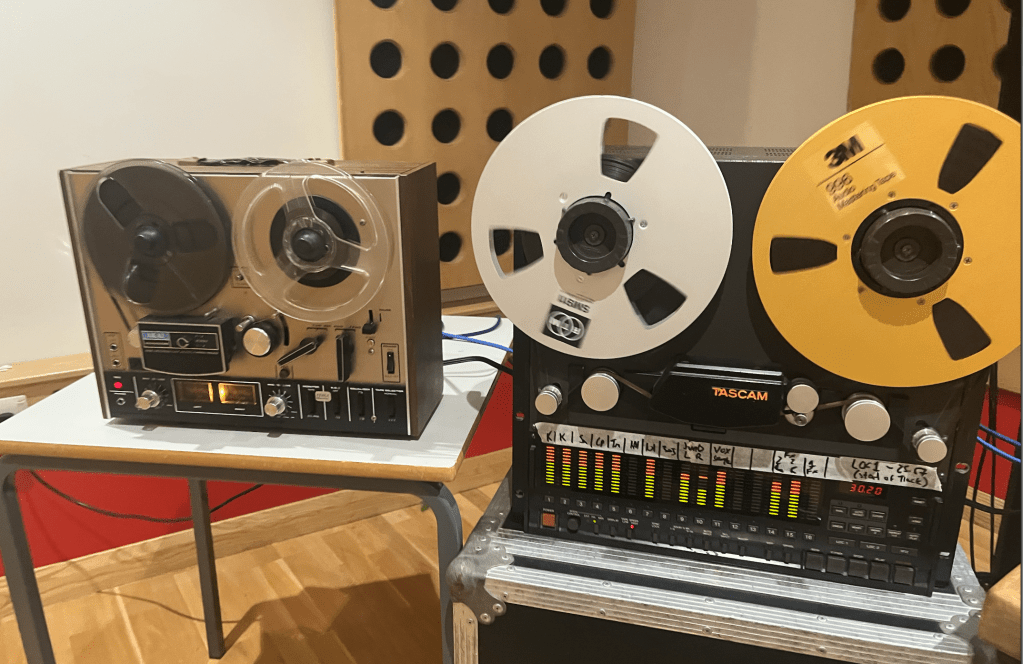
It’s such a satisfying feeling seeing both of those tape machines running side by side with a piece of music running that I composed fully without any DAW. This is a serious feeling of accomplishment here. For years I’ve dreamed of producing something like this, even if the end outcome isn’t my best produced piece of work, the process is everything, I can’t quite explain the reasoning, but I love tape as a medium. The physical item, seeing the music physically move across the tape heads the connection to the past and to the music that was produced in the past, everything about this process fills me with joy, I make music for me first of all and the process is the most important part.
This is the outcome of the desk mix recorded to the smaller AKAI tape machine
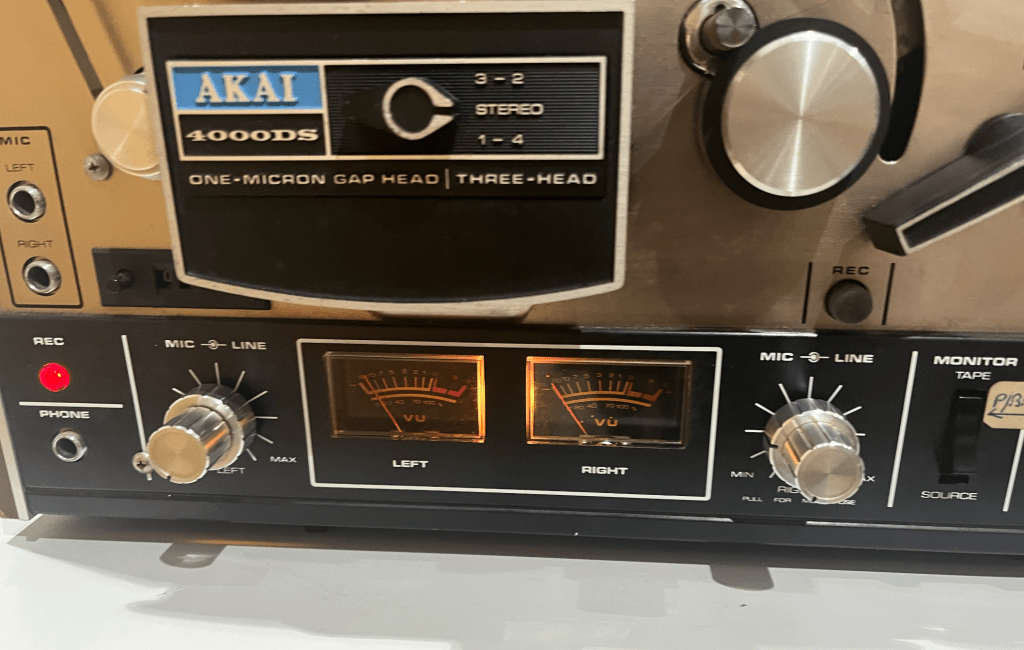
The mix actually sounds nicely balanced and with a bit of mastering may be done, at this stage I have the individual tracks and the mixdown digitized and the option for another analogue desk mix at a later date, I have options on how to finish this track.
Hits Like Thunder – Breakbeat Tape Wash
I really want to utilise tape as much as possible in this project and figured it would be a great way to incorporate the tape machine into a track as an effect, a way of ‘colouring’ the sound, much like how I used the FX pedals to colour elements of the track ‘Underground Habits’. I had sent some breakbeats through the Tascam MSR-16 when I was testing this machine at the beginning of this project and noticed there was a quality attached to those recordings. It applied a mixture of EQ, compression and slight saturation but not as simple as that, it was its own unique character and without sounding cliché added a level of warmth to the drum break samples and an old-school feel.
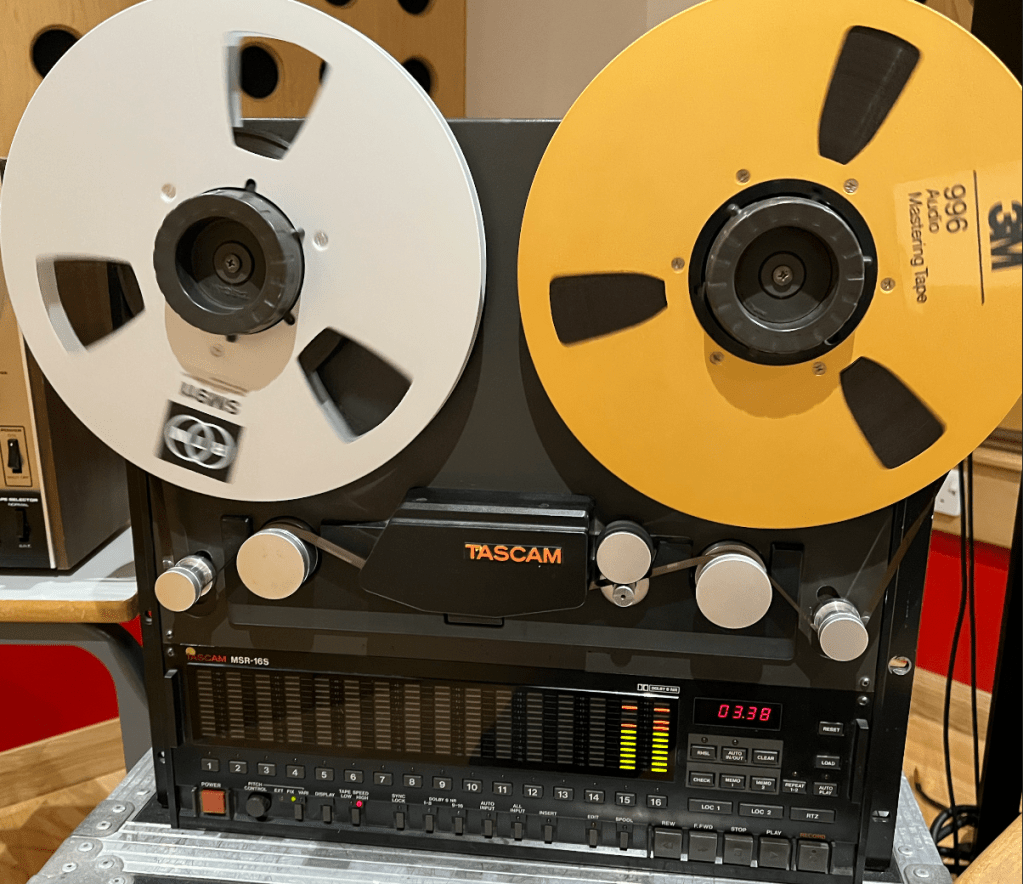
The breakbeat rave style track (later named Hits Like Thunder), could benefit from this tape washing effect. I decided that I would route a few choice breakbeat samples from my library through the tape machine, record them in and then digitise them to be used in the track. In a way I was creating my own sample pack of ‘tape washed’ breaks.
I decided to send 3 different levels of signal into the tape machine to check how the sound is affected here, remember this tape machine doesn’t allow for monitoring during recording and as with before, I would need to record, then rewind, then play to hear the outcome of the experiment.
I found that hitting the tape machine hard but just at the point before the signal was solid in the too red without any movement was the perfect level.
This provided me with the sonic characteristics I was aiming for and could now start sedinging a variety of breakbeat samples through the tape. I figured that sending some drum breaks grouped together in a stereo channel to the tape machine could be a cool process, in my mind it should compress and glue the breaks together like a bus compressor. I had three break beat samples that I felt worked well together and decided to send these to the tape in a variety of ways, all 3 together, a combination of each of the three in pairs and individually.
Each of the recordings were based on 16 bar loops, my reasoning here was that the tape machine was beginning to get a bit tired and a bit dirty. Rather than cleaning the tape heads I figured I would record long loops and then it meant I could have plenty to choose from, the actual loops themselves are only around 4 bars so it means I could pick the best 4 bars from each section.
I found that there were sections were the dirt on tape heads applied a sort low pass filter in some parts, which would normally be an issue but I had a few bars of clean signal prior to this to choice from and it meant that I could use the filtered sounded parts in a track or section of a track that needed a filter/muffled sounding break.
I love this process, there are so many tape emulation plugins and even outboard effects unts that emulate this sound but having an actual tape is unrivalled, you don’t get the unpredictability with emulations, the real-world effects of humidity, tape dirt, tape wobble etc is difficult to replicate without sounding processed.
Breakbeat Tape Wash – The Filterbank
Following on from the tape washing process, I decided to route some of those recorded breakbeat loops through the Sherman Filterbank. This an interesting device that not only acts as a filter but allows for serious sound manipulation and distortion, this was produced in the mid 1990s and produces a certain character, especially when drums are routed through this. I tested it a few years back but haven’t had a chance to properly use this device.

There is information online that indicates that The Prodigy and The Chemical Brothers have used this in their productions. After using the device initially in the past I could tell and recognise the sound, especially in The Prodigy’s Fat of The Land album. Whether it was the Filterbank used on that album or not, the sonic quality was similar and instantly transported me to that album.
The Filterbank I have access to only has a ‘mono’ input so just took one side of the stereo drum tracks from the tape machine recording and routed this through the Filterbank. I knew I could send a summed mono output from the digitalised copies of the tape breaks to the Filterbank but really wanted to go old school and route straight from the tape to the device.
Without tweaking any of the parameters and just routing the drum to the device with the settings the way they had been left, produced some very interesting results. Not the sound I was after but interesting none the less.
The weird, almost DJ scratching sounding effect here is just an example of the sound manipulation capabilities of this unit. Though this was a cool sound, it wasn’t what was after and reset the machine to produce the filter sweep sound that I was aiming for.
I really love the sound of this filter, you can really crank the resonance and produce some gnarly, screaming style sounds, kind of like the filter on a TB-303 or a Korg MS-20, but much more aggressive. Whether I decide to use this on my breakbeat track or not, I know for certain now what it can achieve and really feels like I could work it into a production or two, especially when I am going for that Prodigy drum sound.
With equipment like this, I find most enjoyment in just using the device and trying out all the options, even if the sonic outcome isn’t palatable, the process of manipulating the sound is where the fun is, not only for this particular device but all the equipment I use. These are for me to enjoy and relish in the process of sound manipulation/creation… If I happen to create a piece of work that others enjoy then that is a bonus, but I have realised that I don’t make music for an audience, the music is a by-product of the process.
I create and conduct sonic experiments, which can evolve into music and I do so for the joy of using the equipment, just like how someone may enjoy a luxury car… they could use any automobile to get from A to B but the joy is in the journey and driving the car, this what I feel like using this equipment and technology.
ARP 2600 Round Two
Enough time had passed now and before creating the planned breakbeat track, there was the matter of the 2600 and the Arpeggiated Chicago Groove Machine track. Previously I had tried to send some sequences to the 2600 synth but found myself troubleshooting more than creating. I had been on a role with successful implementation and exploration of technology and felt that the omens were good for the 2600 to work for me.
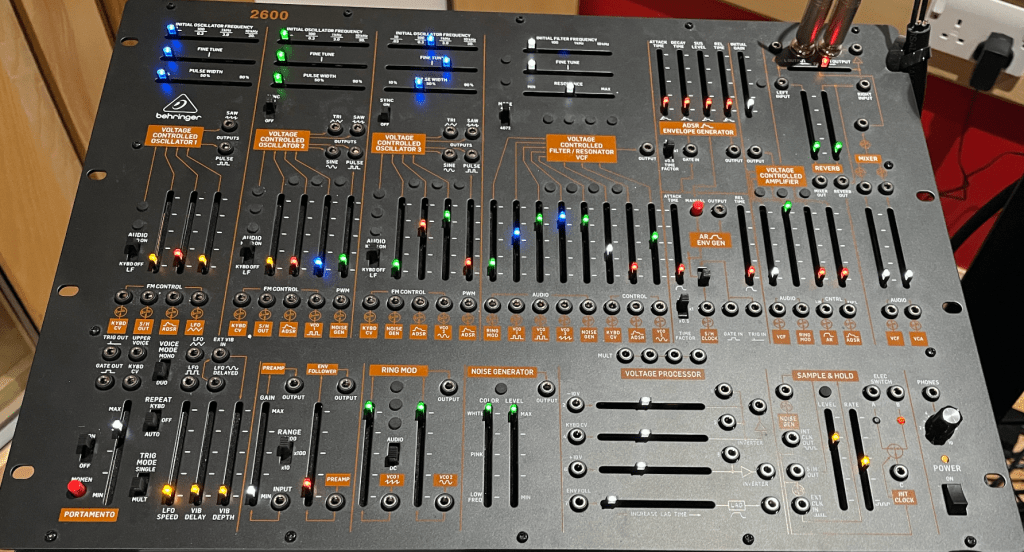
Like before, I sent an arpeggiated sequence into the 2600 from Ableton. This time, rather than a short loop, I decided to create a longer sequence to send to the synth. This seemed to have fixed the glitching issue I had before, it may have been the loop resetting in Ableton that was causing this, but everything seems to work great now, the 2600 feels like a bit of a diva, I’m not sure if you just get some day when this synth works and other days were it decides it doesn’t want to work the way you want, this is a communal unit that is used by students and staff at the college so there is a good chance a parameter or two had been changed between sessions. Regardless, it works now and sounds really good.
The tuning parameters on the 2600 are so versatile and each of the three oscillators can be very finely tuned, this means that I have an extra amount of control of the sound of the arpeggiated line, the balance is in tuning this in such a way that the oscillators and base synth (MS-1) work together and sound in tune. This is quite a fine art and one millimetre of movement on a tuning fader can mess up the whole patch.
This was the first outcome from tuning
I felt after a while of playing this and listening to this that the tuning didn’t feel right, it worked with the baseline and did sound cool but I think it sounded too dissimilar to both Your Love and my older Arpeggiated Chicago Groove Machine track, not that this track was to sound like them exactly, but I felt this sonically I was going in the wrong direction and decided to tune this synth more like the original version.
Finally, the 2600 produced the good and did it so well. I knew that if I good this synth working it would sound amazing and it didn’t disappoint. I recorded a few takes and printed the audio from the 2600 and the MS-1 into Ableton for me to take this home and develop further into a fully-fledged track.
The 2600 is a piece of equipment that I have had access to for a few years now and always wanted to incorporate into a track but never had the chance, I have finally done this now. I seem to be ticking off quite a lot of things like this during this project, which is one of the reasons for undertaking this research, a chance to use equipment and techniques I have always wanted to use and in a manner that both produces enjoyment in the process and a tangible output in a produced piece of music.
The Arpeggiated Chicago Groove Machine Part 2
With the 2600 and MS-1 synths recorded I developed this track further at my home studio. I felt like the track needed some string sounds, like ‘Your Love’. I had planned on using the Kawai K1r synth on my Jun 606 track but feel like that track doesn’t work with the string sounds within this module and I feel like that track (Jun606) might not suit having strings at all.

I knew that from previous setups with this synth it would be best to pair this with a chorus effect to thicken the sound up.
At this stage I realise that I have briefly mentioned the process of recording from analogue/hardware synths, sequencing MIDI from Ableton to the hardware units and recording audio from the units into the DAW.
I feel that now is a good time to fully show the workflow here and will use the process of recording the Kawaii synth and the string sounds for this track as demonstration of this.
This is the process I usually use to incorporate hardware synths in a hybrid workflow/setup. This track alongside a few others in this project utilize this workflow, there are a few that use a different approach, ‘Factory Reset’ is fully out of the box and recorded to tape, ‘Jun-606’ was sequenced using the Juno sync in from the TR606, and later the process for ‘000’ and ‘RTZ’ will feature tape loops.
The variety of workflows, techniques, musical styles, processes and equipment used for this project really does showcase my versatility as a producer. I don’t often like to boast or brag about my skills but the more this project has progressed, the more I have come to realise just how versatile I can be. I’m not locked to a particular sound or process when producing music. My whole ethos has always been that of ‘no-hold-barred’, I make the music I want to make, in the style I want to make and won’t conform to specific sound or branch.
I finished this track off with a sample that discusses house music and the importance of Chicago, this is the same sample I used in the first The Arpeggiated Chiago Groove Machine back in 2017 and wanted this to be present in the new version. When listening side by side there are a few similarities between the two versions but they both also sound like different pieces of music from different points in my production timeline. This new version also sounds more like ‘Your Love’, the nostalgic reference that inspired both versions.
The Arpeggiated Chicago Groove Machine Part 1
Acid Monolith Beats – Instrumental
My next track, Acid Monolith Beats, uses sample-based acid house tracks like MARRS – Pump Up the Volume and tracks by Coldcut and Bomb the Bass as points of reference. I’ve always loved incorporating samples into my music, specifically short snippets from movie dialogue, or a phrase/snippet from a track. Copyright laws have prevented me from properly using this technique, but I have sicne learned to adapt. There is a whole world of copyright free sample packs that can provide the material for producing in this way safely.
Turntablism and techniques like cutting and scratching are key elements for these reference tracks. I am not by any means skilled in this way, but I can perform some intermediate scratching techniques, which I can record then manipulate in Ableton to create the illusion of proper turntablism.
Before building a collage of samples and scratches I would need a basic instrumental track to build from. To keep this simple, I programmed in an acid stye bassline and used both the SH01a and a Korg Monologue to produce this sound. I didn’t want just another TB303 here so decided to use these synths instead.
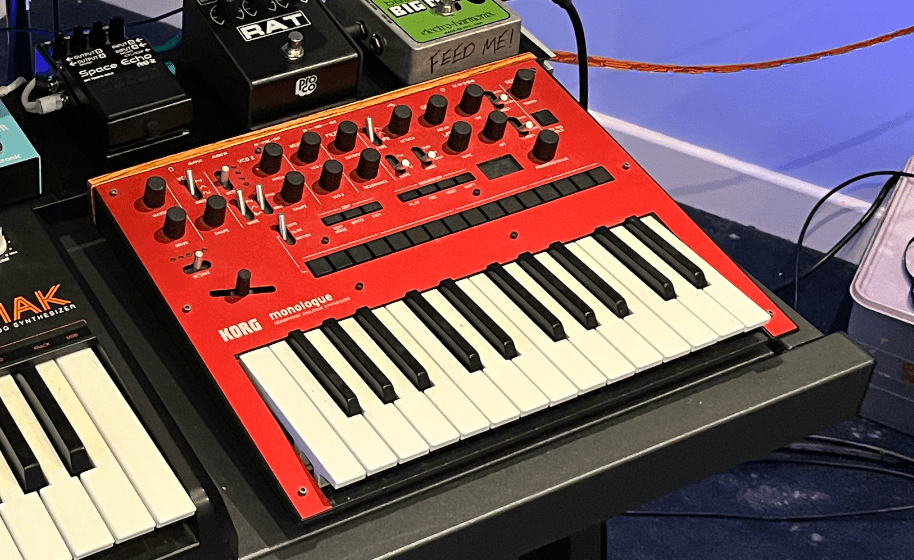
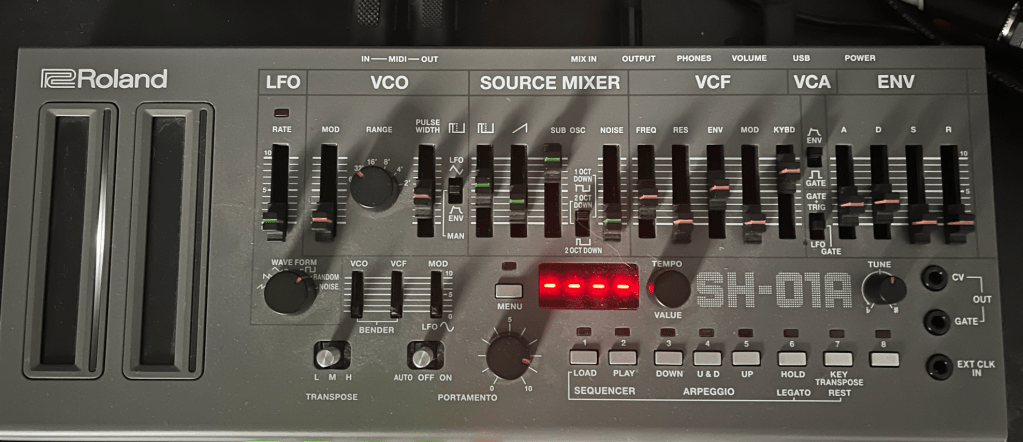
This was accompanied by some drums using a combination of TR707 and TR808 sounds, to fit the aesthetic of the genre. I used the AKAI Miniak synth for some chords.
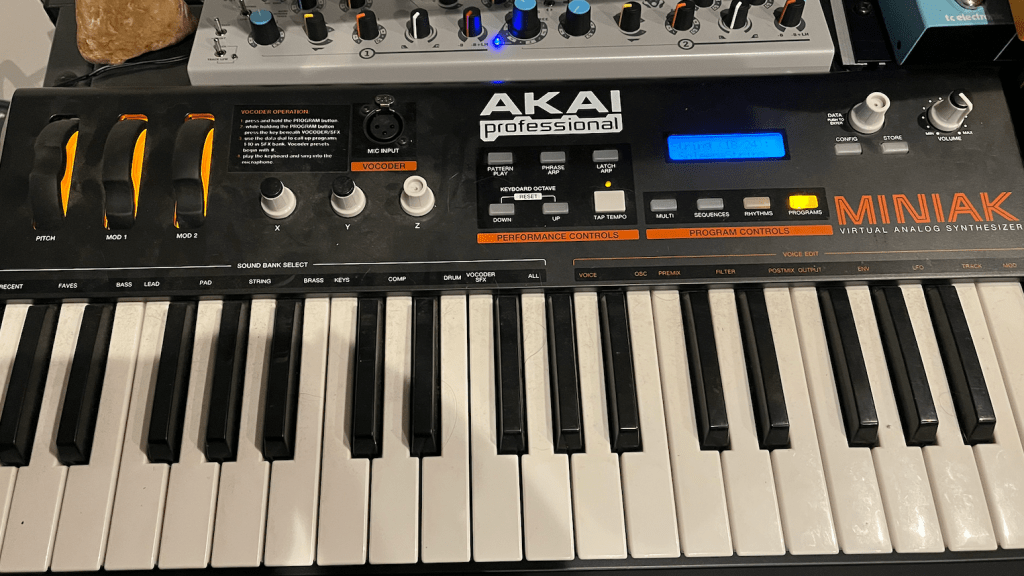
I wasn’t too picky with the synths used here, they simply fit the bill sonically for what I needed, the attention for this track is focused more on the use of samples, and scratching using DJ controllers and vinyl turntables.
Acid Monolith Beats – Samples and Scratching
The key process and technology for this track is the use of sampling and turntablism. I would use 3 main pieces of technology for this, a DJ controller connected to Serato DJ, a midi controller connected to Serato Sample VST sampler and my record turntable – an Audio Technica LP 120 (Technics 1200 clone). The goal was to use the DJ controller for a combination of scratching and sample playing, emulating a turntable but with approved samples and to use the vinyl turntable for old-school scratching. Then Serato Sample fills in the gaps, treating this sort of like an MPC or other hardware sampler.
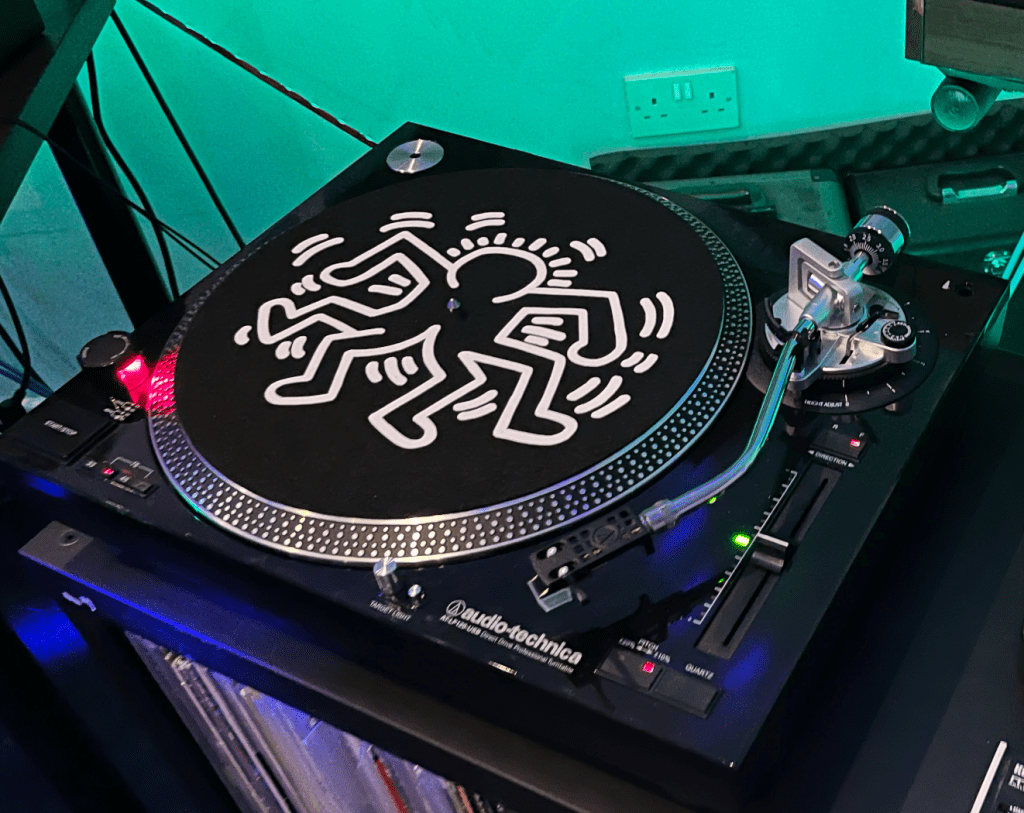
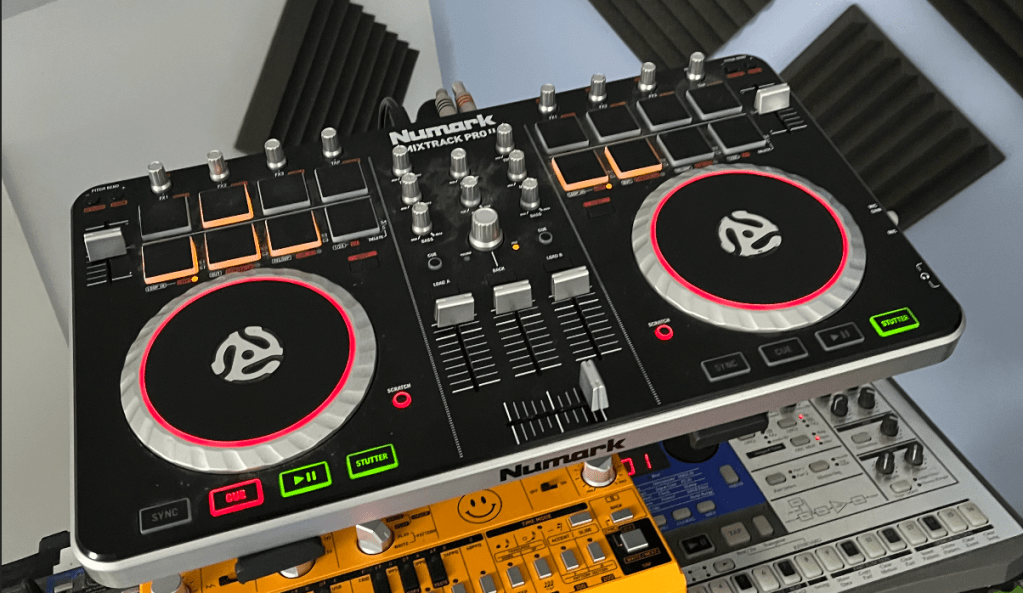
Scratching using the DJ controller
Scratching using the vinyl turntable
Both pieces of equipment have their benefits, I much prefer scratching on vinyl record, as this feels more authentic and the record moves, so you have more control over the platter.
Though I predominantly used sample pack samples for this track, I did use a few subtle samples from vinyl records.
I feel that this project really calls for the use of samples from vinyl records as this is how the producers would have did this back when the reference tracks were produced and this whole project is about replicating the process.
It really makes a difference using the turntable, I really love the process of taking a piece of audio from on old medium and using this creatively, the act of taking the record and setting this up on the turntable is so satisfying.
The process of building up a collage of samples was very time consuming, I really wanted to do more with this track, but time was of the essence, there was still 3 more tracks to produce, plus a mix and master of the album to cassette.
This is a part of the track that heavily uses the sample collage technique.
I feel that this track needs much more attention than this project allows, or that this is a technique and style of production that is perhaps too new to me to master in this short time.
Hits Like Thunder – Building from The Breaks
Following on from the tape washing session, I now have a collection of breakbeats to build this track from. The plan is to produce a 1994 style rave track. The Prodigy – No Good, was my original reference here. This was Liam Howlett’s answer/version of the Eurodance sound at the time, combining some elements of this sound – the pop style female vocal hook and the organ stab sounds combined with the raw Prodigy style rave sound.
I wanted to try something like this. Finding a Eurodance style vocal hook and blending the sounds of Eurodance with breakbeat rave.
The nostalgia here comes in two parts, one is my general love for The Prodigy sound, No Good was the track that made me fall in love with The Prodigy, I was aware of hits like Firestarter and Breathe from my childhood and did resonate with these tracks but it wasn’t until I heard that de-tuned organ style lead synth on No Good that I really fell in. love with Liam Howett’s production style.
The second part is Eurodance itself; the genre gets a bit of stick for its pop style and cheesy characteristics, but some of those tracks from circa 94 are straight up bangers. None more so than ‘Ice MC – Think About the Way’, this track has extra levels of nostalgia. It features in the movie Trainspotting and at a pivotal part in the movie when things are looking for the lead character Renton, I always feel a sense of happiness when I hear this track, Trainspotting was an important movie for me growing up and holds an place in my heart and when the scene plays with the track ‘Think About the Way’, I instantly feel chills.
I knew that the breakbeats and bass synth had to hit hard and raw to counter the pop sounding Eurodance melodies.
I combined the three breakbeats that I processed through the tape machine together in Ableton at around 140 BPM and reinforced with a 909 and 808 kick drum sample.
I really wanted to go to down with the Eurodance sound for the main melody and used the Yamaha SY85 to create a chord progression that kind of reminded me of ‘Think About the Way’.
This is really pop sounding melody and when combined with a Eurodance style vocal sample will really need a bass synth that counters this and provides some rawness and grit to the track
I combined these chords with a bass synth patch on my Novation XioSynth that had that sort of Prodigy style sound. This synth was the first synth that I bought when I was 17 and holds a lot of personal connection, I try to use this synth as often as I can because of this but also because it is criminally underrated… it is amazing for bass synth sounds, especially rave style bass sounds.

I paired the SY85 with the Kawaii K1r to create the chord melody and played alongside the bass and drums sparked a feeling inside, The tracks in the project are pieces I am proud of but require a fair amount of work to be ready commercially and even then, none a hit standard, not that this is what I was aiming for.. but this track has potential.
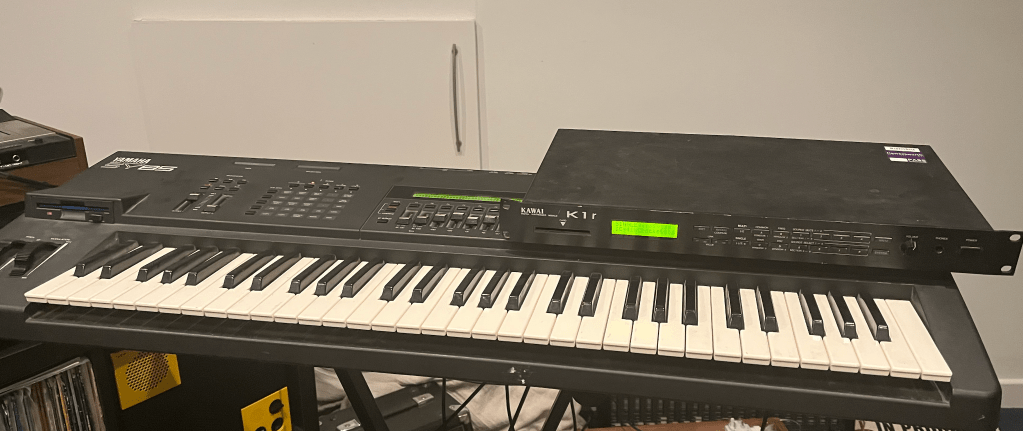
At this stage the instrumental of the track was in place and the overall vibe and tone set, a nice contrast between the gritty breaks and heavy basslines and the Eurodance style chords.
The next step here is to find a vocal sample another melodic element and other little parts to finish the track.
Rockfield Studios
During this project I had the honour of attending a production masterclass retreat at the legendary Rockfield Studios.
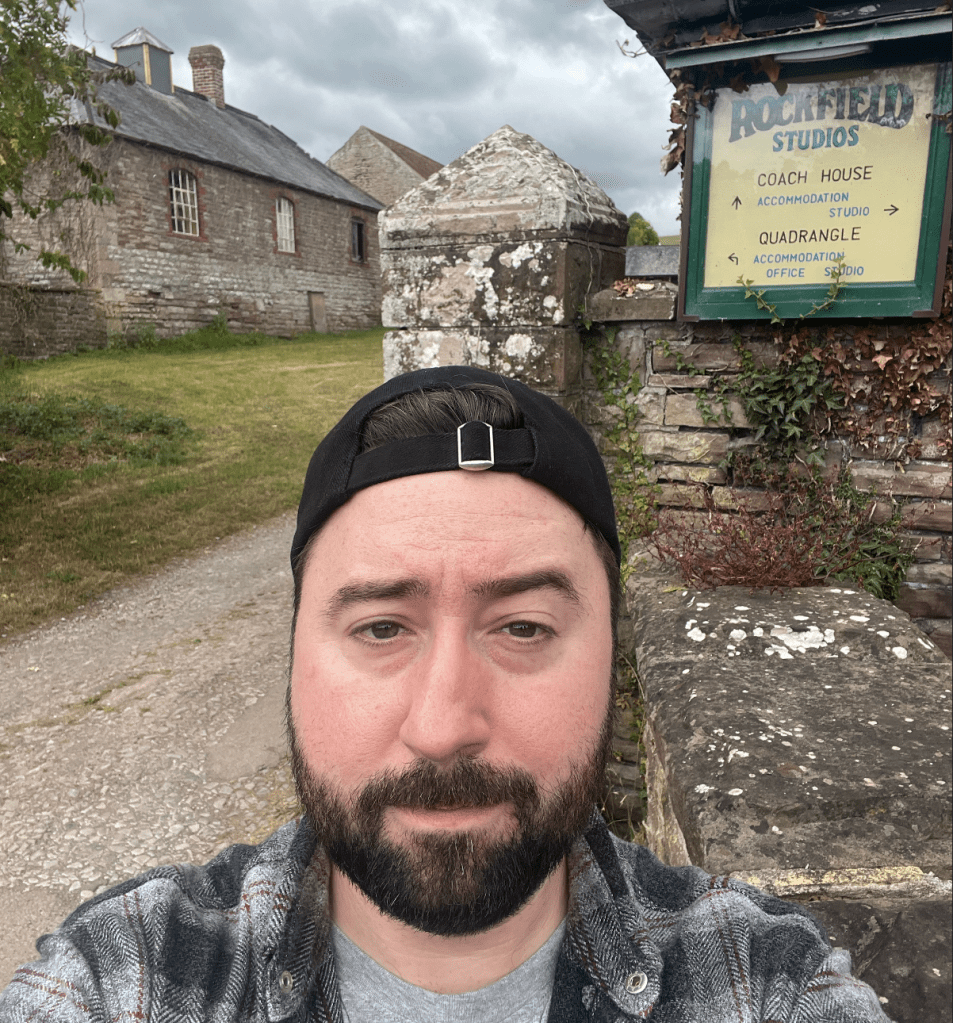
I made the most of time here exploring the technology and equipment they had available. There is way too much to explore here and most of this doesn’t feed directly into the research, but as this project is about technology from the past and this studio is a treasure trove of the past it makes sense to note a few highlights of my time here.
I was shown a real Hammond organ with Leslie speaker and had a chance to play some sounds though the Leslie.
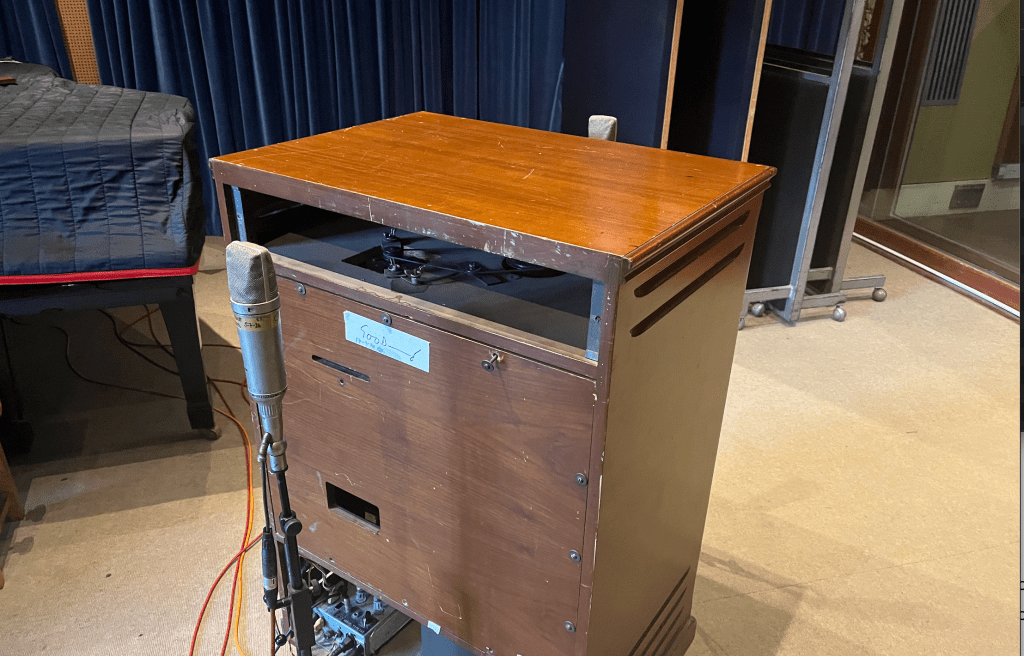
The Leslie is an amazing piece of technology, using rotating cones to recreate the doppler effect producing a tremolo and vibrato style sound that is unique to the speaker.
In an interview with Music Radar, Nicolas Godin from the band ‘Air’ explained that he achieved the vocal effect on the track ‘Sexy Boy’ by routing his voice through a Leslie speaker, it was my instinct here to route some vocals through the Leslie.
Unfortunately, I am unable to provide footage of this vocal routed through the Leslie as the band I recorded at the studio have requested that footage and files from the session are to remain private until the label provides permission.
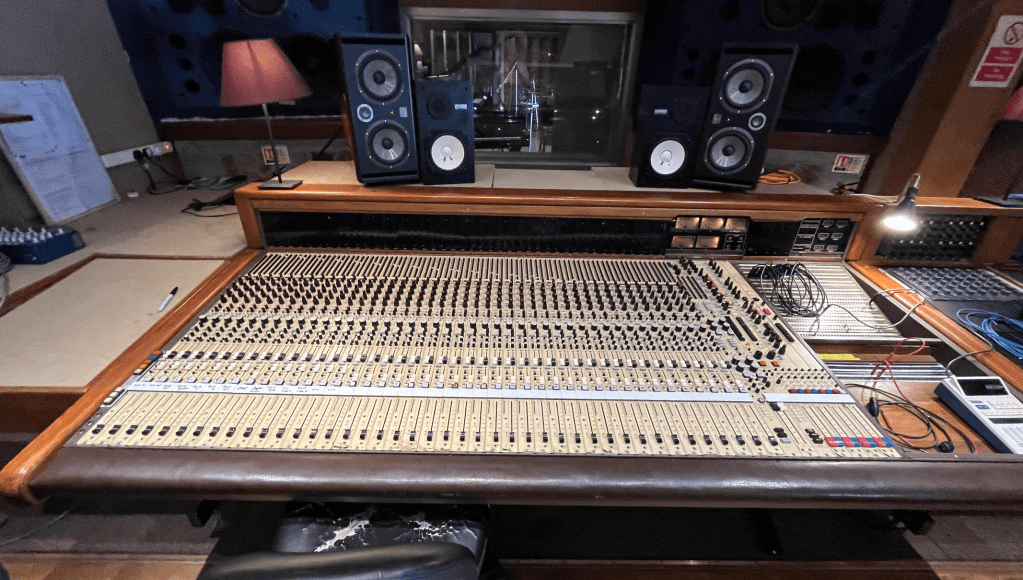
Using a Neve and MCI mixing desk,
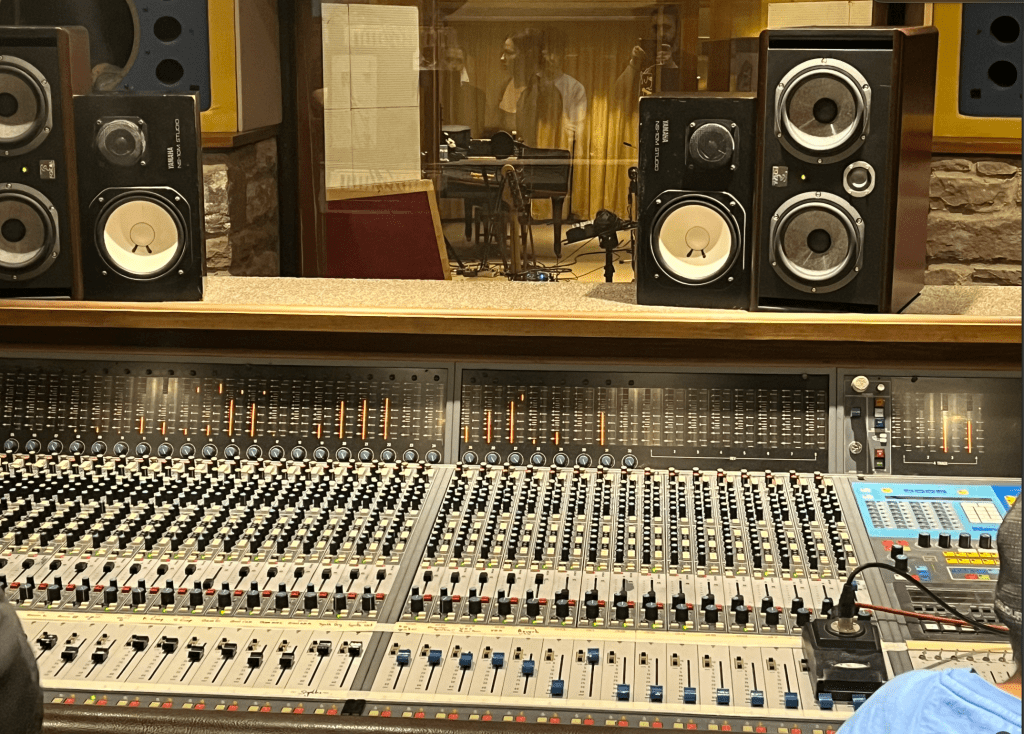
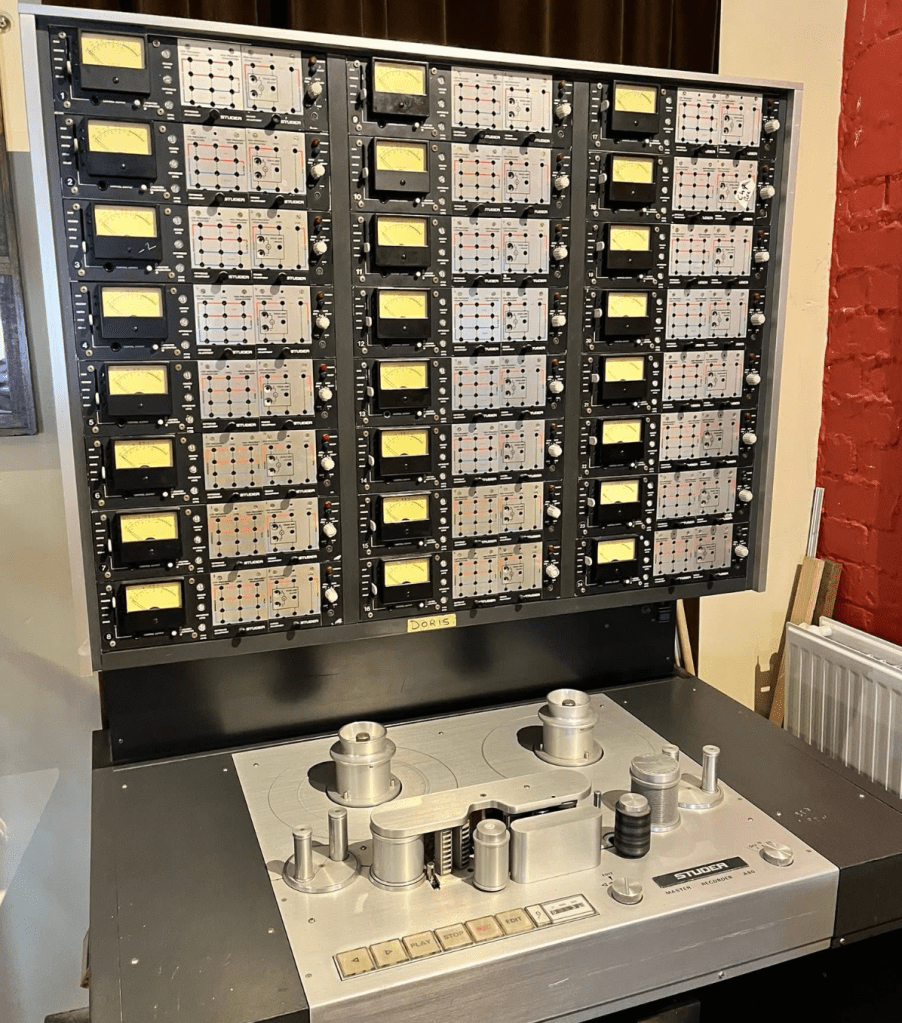
seeing the tape machine that Bohemian Rhapsody was tracked to
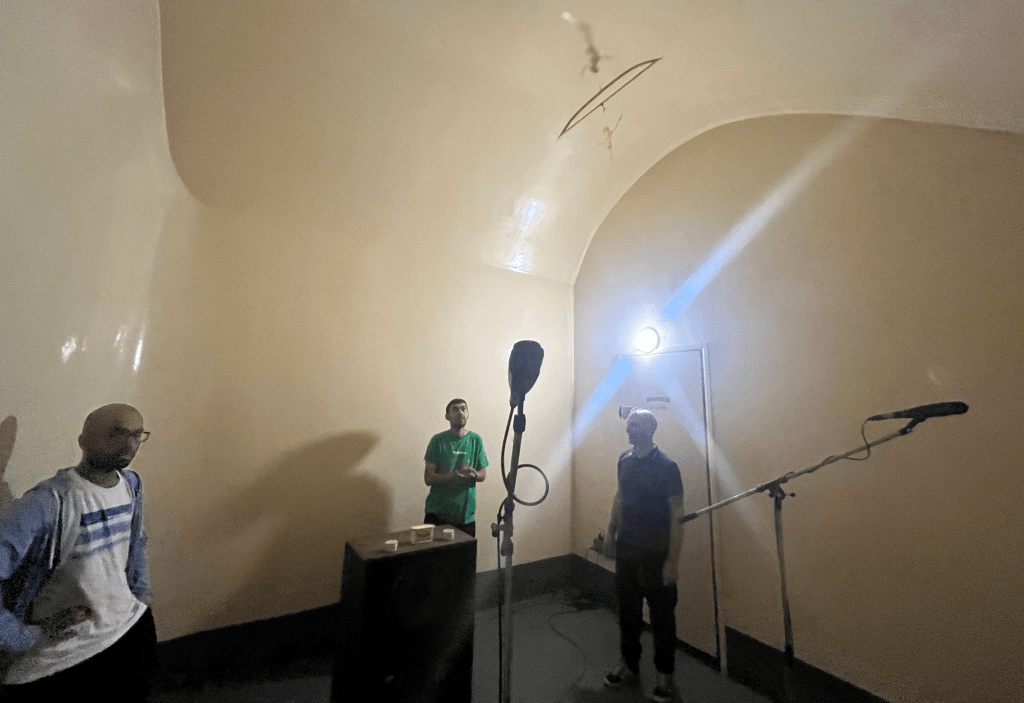
viewing and using the echo chambers
and using an EMS Synthi A were all highlights.
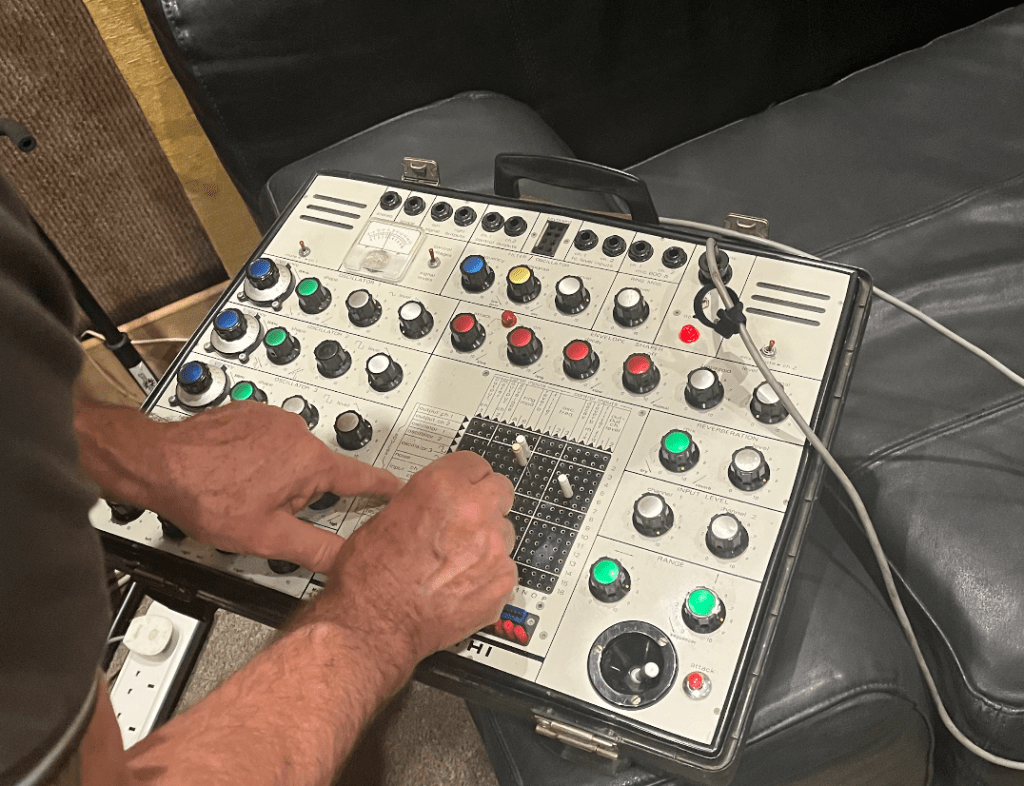
But the most important part of the week for me was the tape loops.
On the last day at Rockfield I had the chance to learn first-hand from one of the engineers about tape loops and creating experimental pieces using this technique.
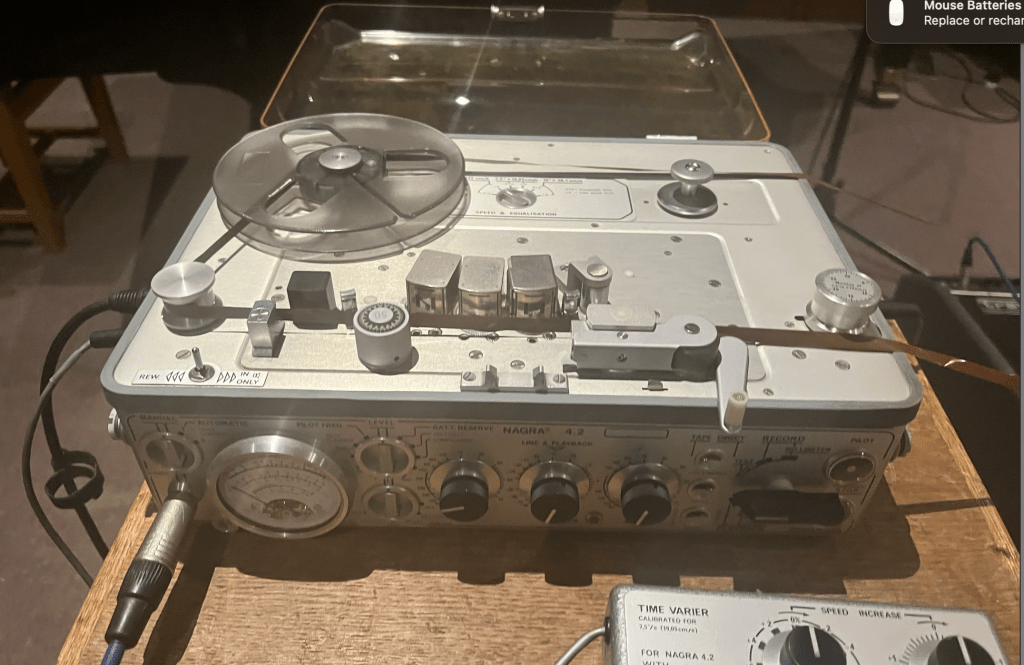
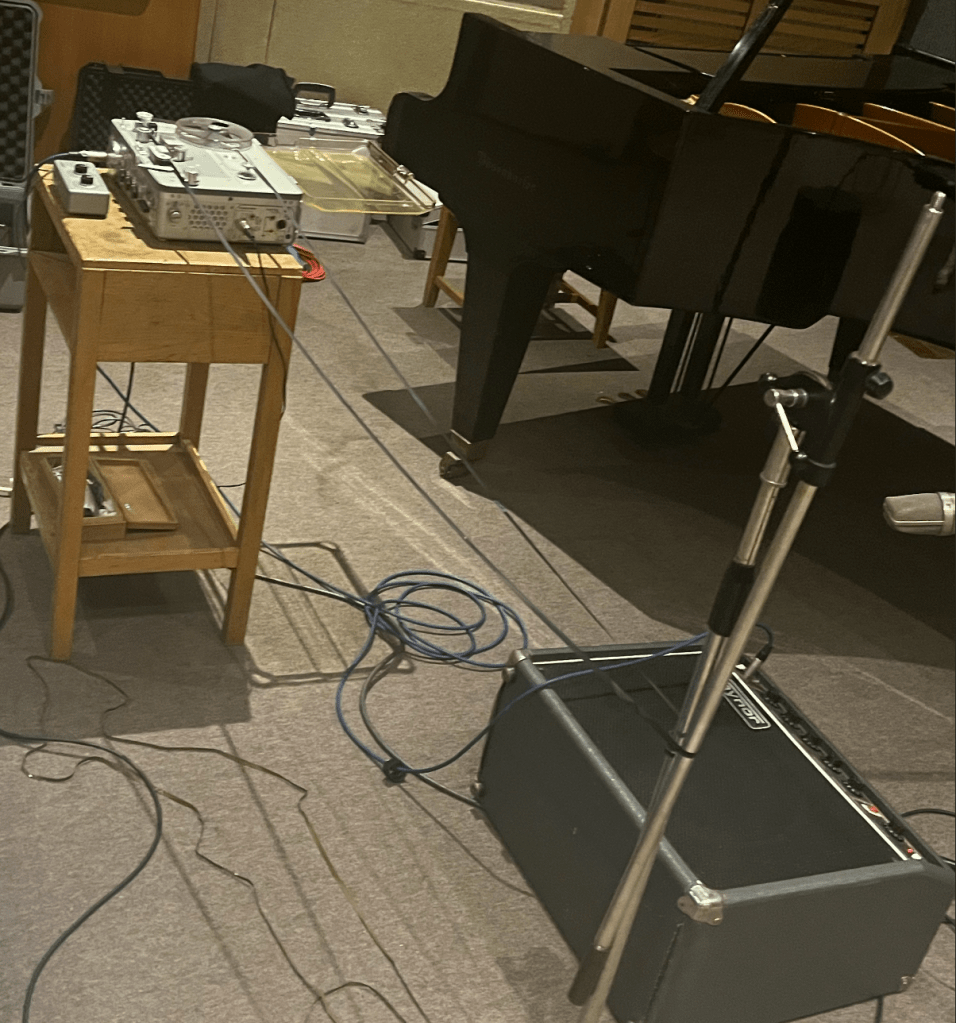
We set up a tape machine with a pre-made loop, the engineer had a shoe box full of these. And used mic feedback as a source to layer sound onto the loop.
Another technique that I have always wanted to do but never had the chance was to use the Alvin Lucier ‘I Am sitting In a Room’ double tape machine technique. We set up one machine to record sound from the microphone then the tape feeds to a second machine that plays the sound out of a speaker, the mic then picks up the sound of the speaker and the room’s frequencies through several passes the original recorded sound is slowly replaced by the resonance of the room.
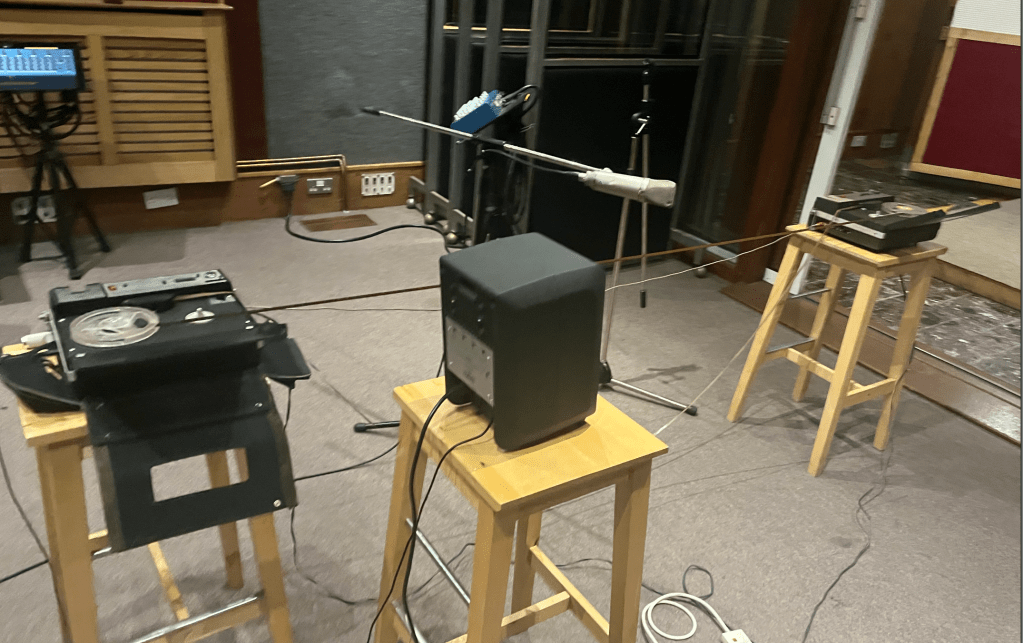
This all feeds into the last studio experiment of this project, I will use the techniques I have learned here to produce a tape loop based piece that will form both the end and beginning of the album.
Hits Like Thunder – Vocal Samples and Final Elements
The Rockfield week was great, and I learned so much over those days, especially tape loop stuff but I was on a roll with this breakbeat track before heading away and needed to finish this off.
I found a vocal sample that fit the track, a female vocal with a Eurodance style delivery and lyrical content, bit cheesy but that was the idea, this is from a copyright free sample pack and safe to use for release, I wish we lived in a world where I could be creative and find vocal samples from real records like Liam Howlett did but unfortunately this is the way I have to work as I have very little chance of clearing a vocal sample form a record.
I decided to use the Leslie technique I had used at Rockfield but with a VST Leslie and routed the vocals through this.
‘Ice Mc – Think About the Way’ and other tracks in this style and even old breakbeat rave tracks use quite a lot of ragga, style vocals or samples so felt it was appropriate to fill out the track with some samples in this style.
I finished this track off with some organ sounds that fit the vibe like ‘No Good’ and ‘Think About the Way’, layering up sounds from a few sources – the Korg M1 VST, Novation XIO, and a sound from the Rave Generator VST that emulates the ‘Rock Organ B’ preset from the Roland JX-1, this is probably the sound that Ice MC used alongside many other Eurodance acts.
Looking back over this track, it is by far the most produced and finished sounding track on the album and features the most variety of techniques and sounds – a combination of tape processing, old-school hardware synth sounds and my newer Novation synth, VST synths that emulate vintage synths and heavy use of sampling. I’m really proud of this track, sure it might be a bit poppy and a bit cheesy but I love it, as I mentioned Eurodance gets a lot of stick from purists, but you can’t deny a banger and with this track I am reminded of ‘Think About The Way’ and the nostalgia I feel when I hear this track.
Tape loops – 000 and RTZ
The final studio experiment in project involved using tape loops to create an experimental soundscape drone-based piece that will act as bookends to the album.
I was inspired by Boards of Canada and Aphex Twin’s ambient works here. Boards of Canada are a very nostalgia focused act; they use a lot of vintage sounds and broadcast material from their childhood throughout their music. Another piece of music that inspired this was the Intro track for Music for The Jilted Generation which features an eerie droning sound and typewriter and spoken words.
I began by creating some physical tape loops, after learning from the engineer at Rockfield and asking how he creates his loops and measures them I was informed that it is pretty random, in this process of layering droning sounds using the sound on sound technique it doesn’t matter too much as long as the tape loop is long enough to clear the tape machine route through the heads and through a mic stand next to the machine.
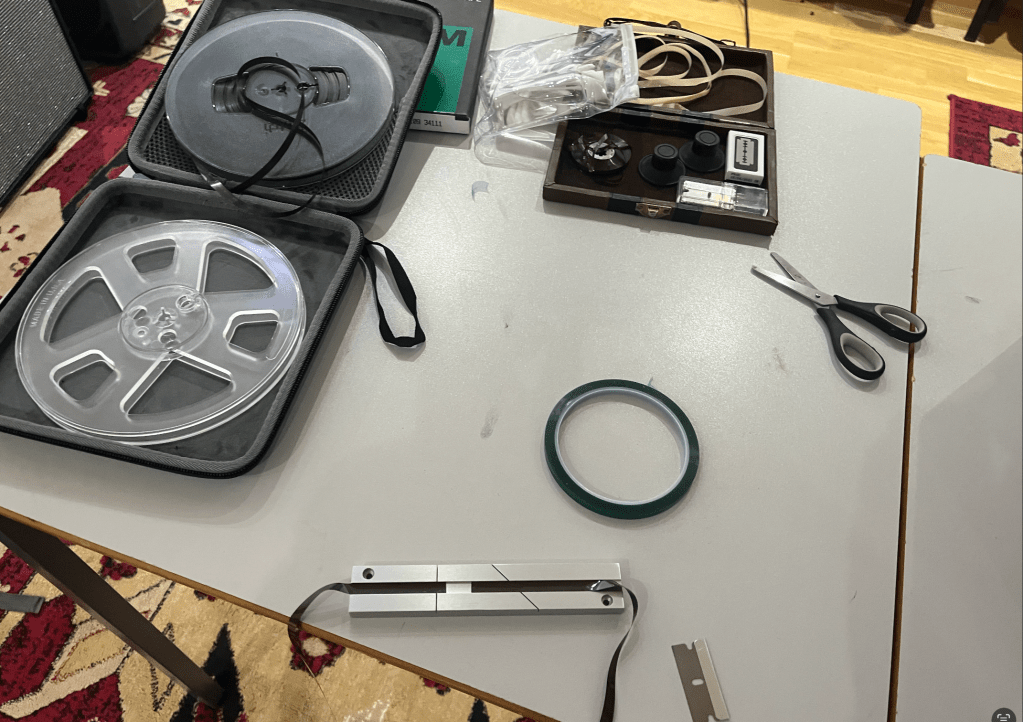
I used my tape spicing kit to create some loops to test, making sure they were long enough to make the journey.
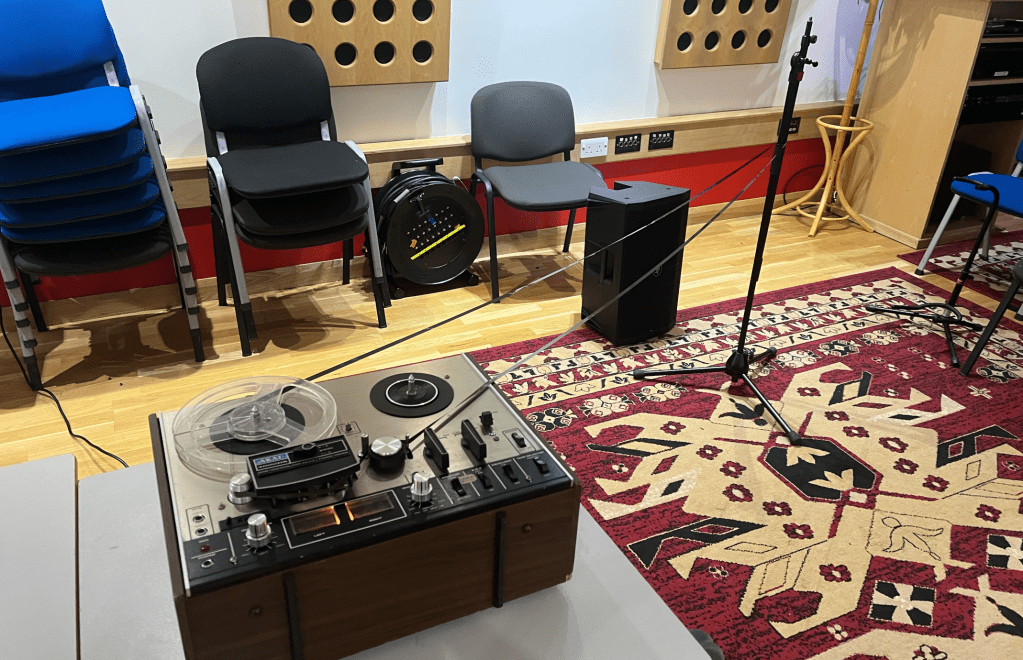
I tested this initial loop by sending a constant sound from my Monotron synth but noticed the tape wasn’t operating sound on sound as the erase head was working even with the S.O.S button engaged. It turns out this button doesn’t disengage the erase head and for me to set this machine up for sound on sound recording I would have to create a physical barrier between the tape and erase head.
After forming the barrier, the tape was not recording the way I wanted, sound on sound. I connected the Monotron synth to generate a tone and send this through a variety of reverb and delay FX pedals that I set up to feedback, producing very eerie tones.
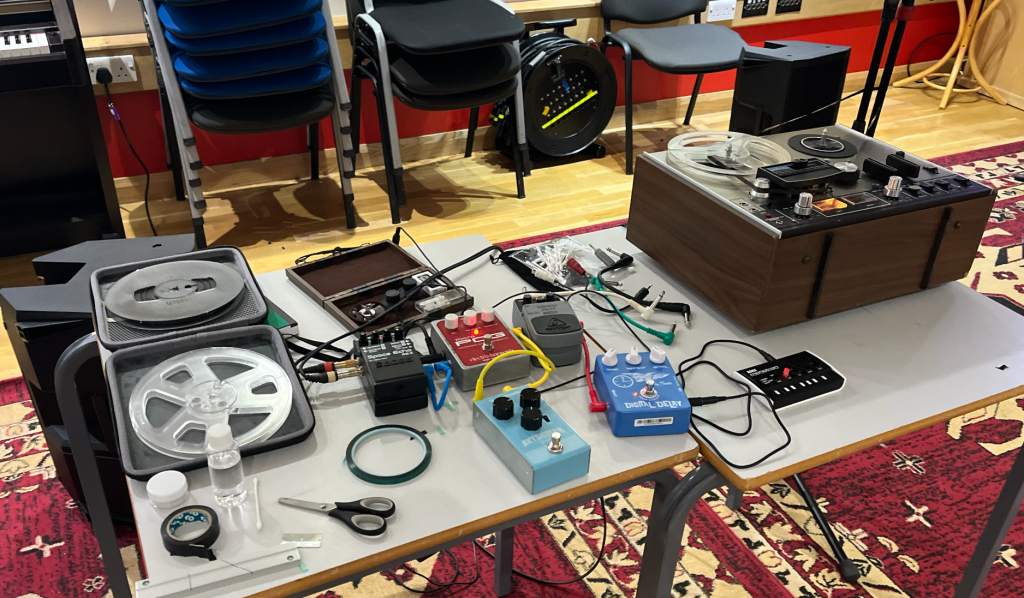
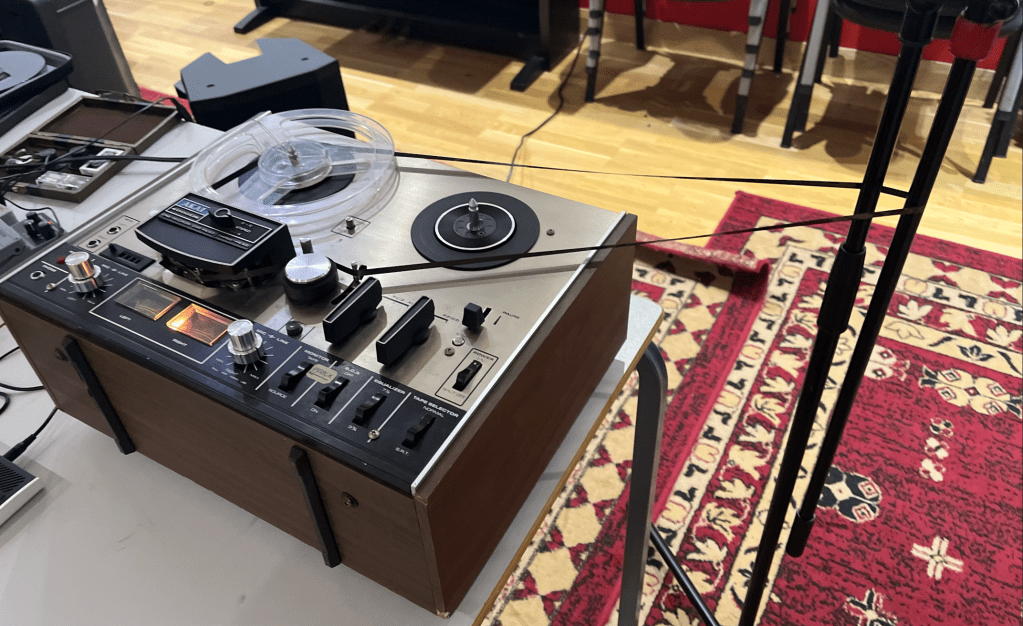
Once I created a droning sound that I liked I decided to pitch this up and down, but the tape machine doesn’t have VariSpeed. The 16 track Tascam tape machine does have VariSpeed control… so, I decided to send the signal out from the AKAI tape machine playing the loop into the other tape machines input then recorded a minute or so of the loop to this tape, which allowed me to control the speed and pitch of this recording of the tape loop.

I could then record multiple versions of this loop at different pitches and speeds to create movement in the drone.
I wanted to add some form of speech to this loop and decided to take a sample of a phrase and route that though the same fix pedals and then onto a loop so that the phrase would repeat at the tape loops. I found an excerpt from a video with Tony Wilson in the recording studio with Martin Hannett discussing the role of the sound engineer and he asks Hannett “Is this an artform or are you just a technician?” This resonates personally with me, as I regularly shift between two worlds of discipline, the creative, artist side and the technical side of sound engineering both of which to me have their merit as an artform and means of artist expression.
I also added a snippet of Tony Wilson discussing ‘Praxis’ and his interpretation of this, the act of doing something that you want to do and then finding out all the reasons why you did it.
During the process of recording these tape loops I happened upon a great accident, I needed clean the tape heads and removed the tape loop to do so but when I set the loop back into the machine I accidently paced it upside down and the tape loop played the contents of what had been recorded on the other side of the tape. A snippet from a previous recording session, played backwords and at a different speed.
This worked perfectly and could use this to create a Boards of Canada style sound, adding a breakbeat to the loop.
000 – Construction
000 opens the album and is a combination of the drones and Tony Wilson loop and Praxis speech then teases the loop that I accidently found/created.
This is my way of replicating The Prodigy – Intro on Music for The Jilted Generation.
RTZ – Construction
RTZ starts the same way as 000 with the drones and Tony Wilson loop but then adds an unexpected breakbeat loop over the drones and then introduces the cool loop that I accidently found.
I warped this loop in Ableton so that is fit in time with the drum break loop and created a Boards of Canada style track like ‘Rue The Whirl’ from their first album. I wanted this track to catch the listener by surprise, having them think it was a mirror of the first track 000 but then moving into this almost Trip Hop style beat.
Track Finalisation, Mixing, Mastering and Recording to Cassette
At this stage in the project all the tracks were composed and almost finished, as time was running out for delivery of this project, I decided to add a few extra transitional sounds to some tracks and then mixed and mastered them all.
I personally feel like all of tracks could benefit from extra elements and attention, but time has run out. These will be revisited before a proper album release but for the purposes of the research these are now complete.
The process for creating each of these tracks is where the research lies and the most important aspect of the project, having an album of deliverable pieces of music is a by-product of the research.
The final piece of the project is the creation of the end format, the cassette. I really wanted to finish the project with a physical artefact and as tape features heavily thought this project it makes sense to deliver the music in this way.
I setup a Pro Tools session with each of the mastered tracks and recorded this onto the tape using an old 1980s Yamaha K-540 recorder.
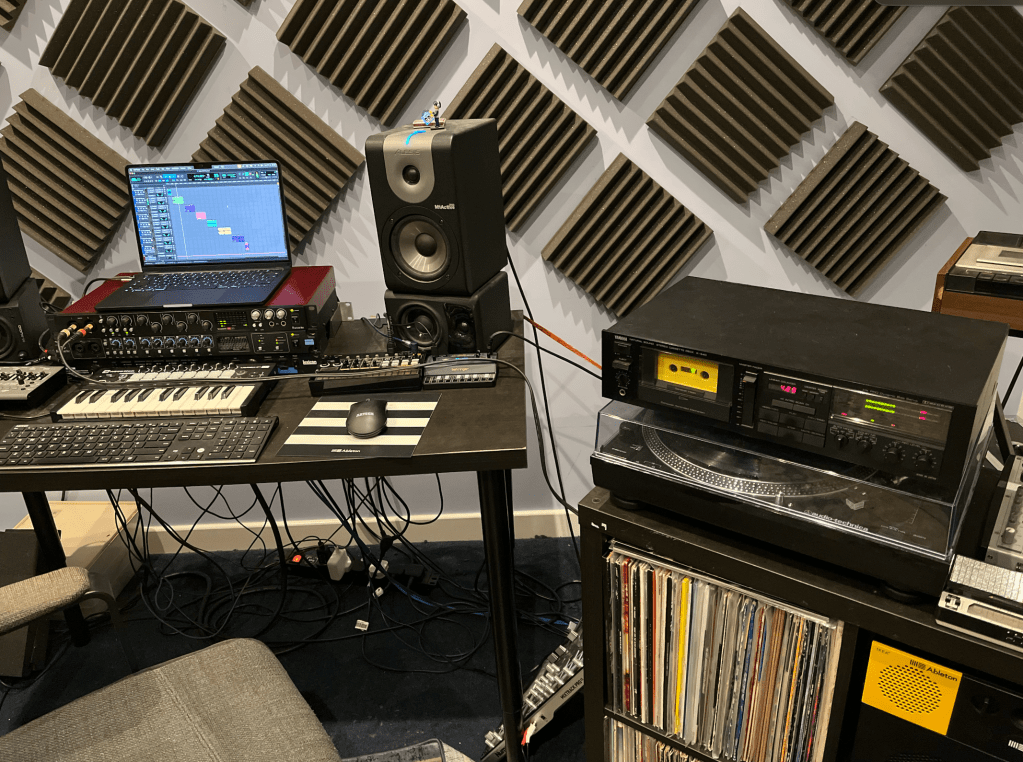
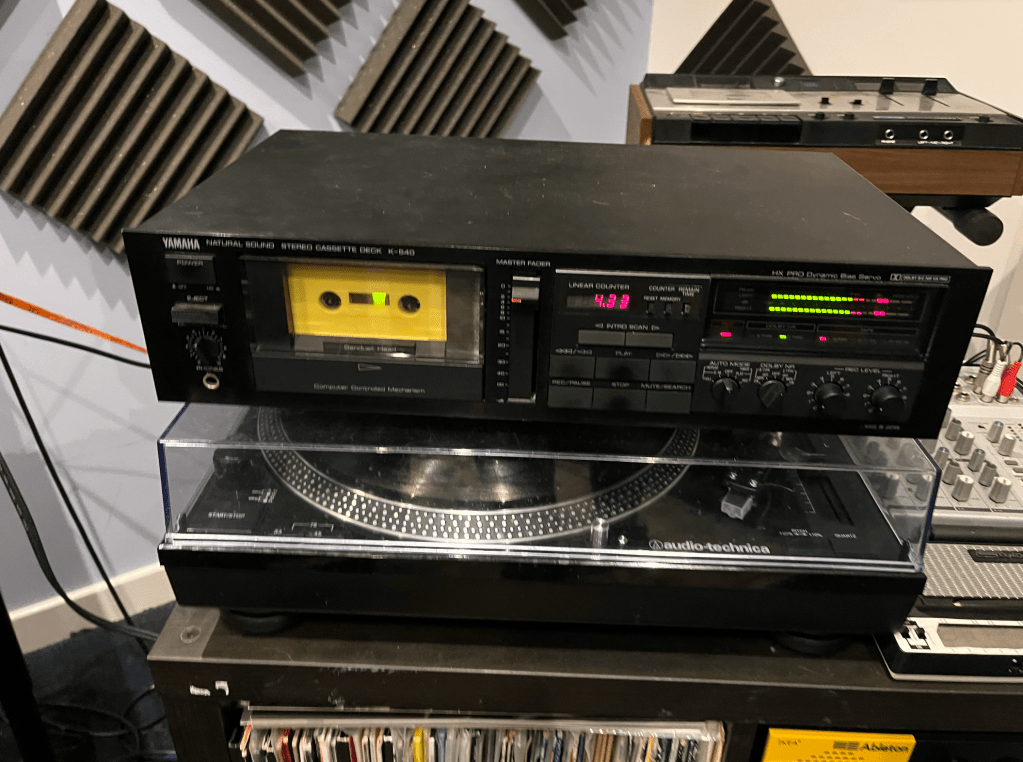
This is such a satisfying way to end this project and creative journey I have embarked upon, the cassette alongside this printed booklet perfectly encapsulates the essence of this project, the cassette is a well-known trigger for nostalgia, the physical act of handling this medium, not even as a means to play the music, but as a physical item to hold and connect with, a nice contrast to the ‘faceless’ digital music listening experience.
The Epilogue
Nostalgia is a complex and often elusive feeling… hard to define, yet deeply familiar. My own nostalgia for electronic music from the 1980s and 1990s stems from growing up during that time, absorbing its sounds and atmosphere almost subliminally. It’s also shaped by a second-hand nostalgia, formed through films, video games, and other media that continue to echo that era.
My love for vintage and old-school technology is directly tied to this musical longing. As a music producer, I don’t just want to listen to that music, I want to make it. I often find myself wishing I had existed as a producer during those decades, immersed in the tools, techniques, and creative limitations of the time.
This project became my way of closing that temporal gap, of stepping into that world as closely as possible. It’s been both a joyful and frustrating process: learning to navigate the quirks and constraints of older gear and discovering the unique textures and workflows that shaped the music I admire.
I’m sure if I travelled back in time and tried to explain to a producer from the past that everything they are doing can be quickly done on a portable computer, at lightning speed but I would rather spent time here in the past and produce using their methods and technology, that they would think I was insane.
I hope this project offers some insight into what nostalgia means to me and how using past technology to create music can evoke these feelings, not just in the final sound, but in every step of the creative process.
 Peter Findlay (Pedro Anelsis)